
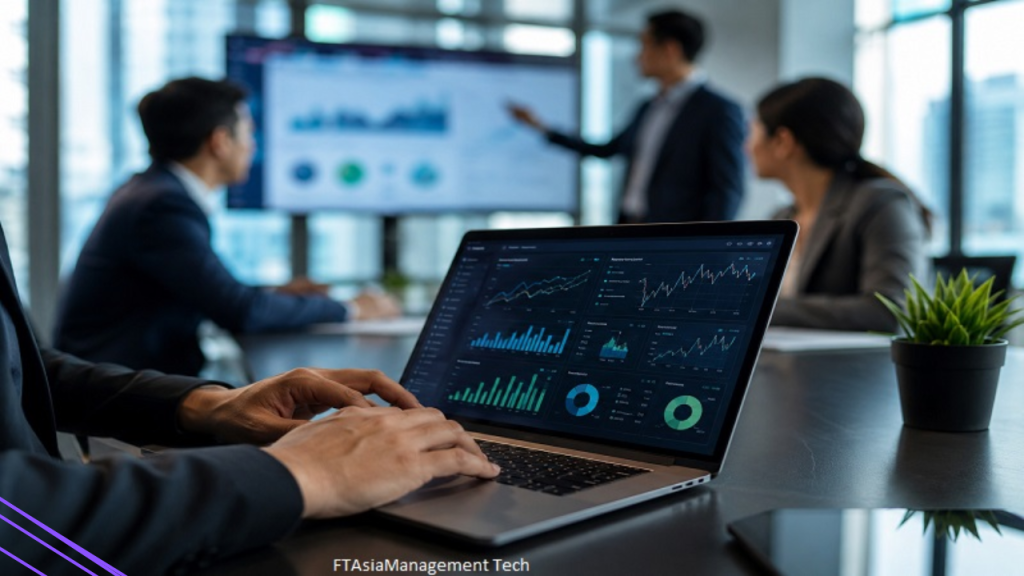
FTAsiaManagement Tech is a term increasingly associated with the intersection of technology, financial management, fintech, digital transformation, and modern business strategy. Current online sources do not consistently describe it as one clearly established technology company; instead, the name appears across several websites discussing technology and finance-related information. The FTAsiaManagement website describes itself as an information-focused blog covering technology trends, finance, digital assets, and business topics rather than a provider of financial services. This distinction matters because readers searching for ftasiamanagement tech may encounter descriptions that present it as a technology platform, management system, or fintech ecosystem. This article separates documented information from broader interpretations and explains how the term is being used in today’s digital business environment.
What Is FTAsiaManagement Tech?
The phrase ftasiamanagement tech generally refers to technology-focused content associated with FTAsiaManagement, particularly material covering digital transformation, fintech, artificial intelligence, cloud computing, automation, data analytics, and business technology. One FTAsiaManagement article describes its technology content as addressing emerging tools, digital platforms, and innovations that affect businesses and everyday decisions. Other websites use the term more broadly, describing FTAsiaManagement Tech as an approach that integrates technology into management, financial planning, operations, and strategic decision-making. Because these descriptions vary, readers should avoid assuming that every claim about the term refers to a single registered technology company. In practical terms, the phrase is best understood as a technology and business-information concept connected with the FTAsiaManagement content ecosystem.
The Meaning Behind FTAsiaManagement Tech
Understanding ftasiamanagement tech becomes easier when the name is separated into its basic ideas. “FT” is commonly associated with financial technology, while “Asia” suggests a regional focus and “management” points toward business, money, and organizational decision-making. The technology component then connects these subjects with digital tools. FTAsiaManagement’s own About Us page says its content helps readers understand modern financial and technology topics in simple language. This makes the concept relevant to entrepreneurs, professionals, students, investors, and anyone interested in how technology changes business. Rather than treating technology as an isolated department, the broader idea connects digital systems with planning, financial awareness, data analysis, productivity, and strategic growth.
FTAsiaManagement Tech and Digital Transformation
Digital transformation is one of the strongest themes associated with ftasiamanagement tech. Businesses increasingly replace manual processes with cloud platforms, automation systems, digital databases, analytics tools, and connected applications. These changes can help organizations process information faster and make decisions with better data. A technology-focused FTAsiaManagement article describes digital transformation as a central part of the modern business environment and connects it with AI, cloud computing, big-data analytics, and enterprise systems. However, digital transformation is not simply about purchasing new software. Successful transformation also requires employee training, process redesign, cybersecurity planning, reliable data, and clear business goals. Technology creates value when it solves a real organizational problem rather than becoming an expensive addition without a practical purpose.
How Fintech Fits Into the Concept
Fintech, or financial technology, forms another important part of the FTAsiaManagement technology discussion. Fintech uses software and digital infrastructure to improve financial activities such as payments, banking, investing, budgeting, lending, and financial analysis. FTAsiaManagement’s published material covers financial technology alongside digital assets, cryptocurrency, and money-management topics. Modern fintech can make transactions faster, improve access to financial information, and create new ways for businesses to manage money. At the same time, fintech introduces challenges involving privacy, cybersecurity, regulation, fraud prevention, and consumer protection. This is why ftasiamanagement tech should be viewed within a wider financial-technology environment rather than as a replacement for regulated financial institutions or professional financial advice.
Artificial Intelligence and Smart Business Decisions
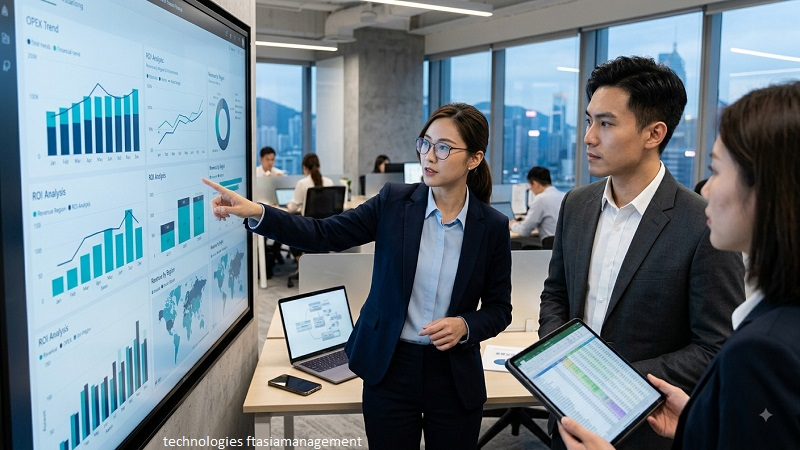
Artificial intelligence is becoming increasingly important in modern business management. In the context of ftasiamanagement tech, AI can be understood as one of the technologies that helps organizations process information and identify patterns. Businesses can use AI for customer-service automation, forecasting, document processing, fraud detection, market analysis, and internal productivity. Technology-focused sources associated with FTAsiaManagement discuss AI alongside data analytics and digital transformation. Yet AI does not automatically produce correct decisions. Organizations still need accurate data, appropriate models, human oversight, and clear governance. A strong management strategy therefore combines machine intelligence with human judgment. The goal is not to remove people from decision-making but to give them better tools for understanding complex information.
Cloud Computing and Business Infrastructure
Cloud computing is another major component of the technology landscape connected with ftasiamanagement tech. Instead of keeping every application and database on local hardware, businesses can use cloud infrastructure to store information and run software through internet-connected systems. Cloud platforms can provide flexibility, scalability, remote access, and easier collaboration. FTAsiaManagement technology articles identify cloud computing as one of the tools contributing to modern digital business systems. However, moving to the cloud does not eliminate every technology risk. Companies still need strong passwords, access controls, encryption, backups, monitoring, and carefully designed permissions. Cloud technology works best when organizations treat security and governance as part of the implementation rather than as an afterthought.
Data Analytics and Business Intelligence
Modern businesses generate enormous amounts of information through sales, customer interactions, websites, applications, financial records, and operational systems. Data analytics helps organizations turn that raw information into useful insights. In the broader FTAsiaManagement technology discussion, analytics can support market research, performance measurement, forecasting, and strategic planning. Some published material specifically associates FTAsiaManagement Tech with data-driven decision-making and business intelligence. The value of analytics depends heavily on data quality. Incorrect, incomplete, outdated, or biased information can produce misleading conclusions. Businesses should therefore establish reliable data-collection processes and regularly review their metrics. When used responsibly, analytics can help managers identify trends earlier and make more informed decisions.
Automation and Operational Efficiency
Automation is another important element of modern management technology. Repetitive tasks such as data entry, invoice processing, notifications, scheduling, reporting, and document organization can often be handled by software. The objective is not simply to make work faster but to allow employees to focus on activities that require creativity, judgment, communication, and problem-solving. Technology sources discussing ftasiamanagement tech frequently connect automation with improved efficiency and reduced manual effort. Still, automation should be introduced carefully. Poorly designed automated processes can repeat mistakes at a much greater scale. Businesses should test systems, establish human review points, monitor outcomes, and update workflows when requirements change.

Blockchain and Digital Assets
Blockchain and cryptocurrency also appear within the broader FTAsiaManagement technology ecosystem. The FTAsiaManagement website states that its content includes information about digital assets, cryptocurrency, and blockchain-related topics. Blockchain technology provides a method of recording transactions across distributed systems, while cryptocurrencies use blockchain networks for digital-value transfers and other functions. These technologies have created new opportunities but also significant risks. Cryptocurrency markets can be highly volatile, and blockchain applications can involve technical, regulatory, security, and operational challenges. Therefore, information about digital assets should not automatically be interpreted as investment advice. The technology itself can be studied independently from whether a particular cryptocurrency represents a suitable financial decision for an individual.
Cybersecurity in FTAsiaManagement Tech
As businesses become more digital, cybersecurity becomes increasingly important. A technology-management strategy cannot focus only on speed and convenience. It must also protect systems, customers, employees, and sensitive information from unauthorized access. Common security measures include multi-factor authentication, encryption, software updates, access controls, employee awareness training, monitoring, and reliable backups. The broader technology discussion surrounding FTAsiaManagement recognizes security as one of the challenges facing digital financial and business systems. Cybersecurity also requires continuous attention because threats change over time. A secure system today may become vulnerable tomorrow if software remains outdated or credentials are poorly managed. Businesses should therefore treat cybersecurity as an ongoing management responsibility.
FTAsiaManagement Tech and Business Growth
Technology can support business growth by improving productivity, customer service, market analysis, communication, and financial visibility. FTAsiaManagement Tech content generally presents digital tools as part of a wider strategy for helping businesses understand modern markets and technology trends. However, technology alone does not guarantee growth. A company still needs a strong product, suitable pricing, effective leadership, customer understanding, and sound financial planning. Digital tools become valuable when they strengthen these fundamentals. For example, analytics may reveal which products perform best, while automation can reduce repetitive administrative work. Cloud systems can support expansion without requiring every new employee to have a separate local infrastructure. These advantages can make technology a powerful business-growth enabler.
Benefits for Small Businesses
Small businesses can benefit significantly from management technology because digital tools can provide capabilities that once required large teams. Affordable cloud applications can handle accounting, customer relationship management, collaboration, inventory, marketing, and reporting. FTAsiaManagement Tech discussions about modern business technology can therefore be relevant to entrepreneurs who want to understand how digital tools affect everyday operations. Small companies should nevertheless avoid adopting technology simply because it is popular. The better approach is to identify the biggest operational bottlenecks first. A business might need better customer tracking rather than an expensive AI system. Another company may benefit more from cloud accounting or cybersecurity improvements. The right technology is the one that produces measurable value.

Technology for Financial Management
Financial management has changed considerably through digital tools. Businesses and individuals can now use software to track expenses, monitor cash flow, prepare reports, manage budgets, and analyze financial patterns. The FTAsiaManagement ecosystem explicitly includes personal finance, money management, and finance-related educational content alongside technology topics. Technology can make financial information easier to organize, but users still need basic financial understanding. Automated dashboards cannot determine whether a business strategy is financially sensible without appropriate interpretation. Similarly, budgeting applications can organize spending but cannot guarantee financial success. The strongest approach combines reliable software with disciplined financial habits, accurate records, and informed decision-making.
The Role of Technology in Asian Markets
Asia represents a diverse technology environment containing highly developed digital economies alongside rapidly developing markets. Countries differ in regulations, infrastructure, consumer behavior, payment systems, and technology adoption. This diversity makes regional understanding important for organizations operating across borders. FTAsiaManagement’s technology-focused content emphasizes developments relevant to Asian and global markets. Digital payments, mobile technology, fintech, e-commerce, cloud computing, and AI are all influencing the region’s business environment. However, there is no single “Asian technology market.” Companies must consider local laws, cultural expectations, infrastructure, language, and consumer preferences when expanding into different countries.
Challenges and Limitations
Despite its potential, ftasiamanagement tech should not be presented as a solution to every business challenge. Digital transformation can be expensive, complicated, and disruptive if poorly planned. Businesses may face cybersecurity threats, privacy concerns, regulatory changes, integration problems, employee resistance, and technology costs. AI systems can also produce inaccurate results when trained or prompted with poor information. Cloud services can introduce dependency on external providers, while financial technology must operate within complex legal frameworks. These limitations highlight the importance of responsible technology management. Companies should evaluate expected benefits against costs and risks before implementing major systems. A gradual, measurable approach is often more effective than attempting to transform every business process at once.
The Future of FTAsiaManagement Tech
The future of ftasiamanagement tech is likely to be shaped by continued advances in artificial intelligence, automation, cloud infrastructure, cybersecurity, fintech, and real-time analytics. A 2026 FTAsiaStock Technology article describes FTAsiaManagement Tech as an approach that combines AI, financial technology, automation, cloud platforms, and real-time analytics within business strategy. These technologies are becoming increasingly interconnected. AI may analyze information stored in cloud systems, automation may act on analytical results, and financial technology may provide new digital channels for transactions. The important question will not simply be which technology is newest. Instead, businesses will need to determine which technologies solve genuine problems while maintaining security, compliance, affordability, and human oversight.
Is FTAsiaManagement Tech a Company or Information Platform?
This is one of the most important points for readers searching for ftasiamanagement tech. Current sources provide inconsistent descriptions. FTAsiaManagement’s own About Us page describes the website as an information-focused blog and explicitly says it provides blog information rather than financial services, advice, or guarantees. Meanwhile, some third-party articles describe FTAsiaManagement Tech as a technology platform or management ecosystem. Because these descriptions do not fully agree, readers should avoid treating every third-party statement as an officially verified company profile. For an accurate article, it is better to describe FTAsiaManagement Tech as a technology and business-information topic associated with the FTAsiaManagement ecosystem, unless stronger corporate documentation establishes a different structure.
How to Evaluate FTAsiaManagement Tech Information
Readers researching ftasiamanagement tech should check the source of every important claim. Start with the official FTAsiaManagement website and distinguish its own descriptions from statements published by unrelated websites. The official About Us page explains that the site provides information about technology, finance, digital assets, money management, and economic developments. Third-party pages may add claims about specific services, technologies, locations, founders, or business structures that are not confirmed by the official site. Comparing multiple sources can reveal these differences. This approach is particularly important when an article discusses investments, financial products, company ownership, or claims about guaranteed results. Good technology journalism should prioritize clear sourcing, transparency, and verifiable evidence.
FAQs
What is FTAsiaManagement Tech?
FTAsiaManagement Tech is a term used for technology-focused content associated with FTAsiaManagement, particularly topics involving fintech, digital transformation, AI, cloud computing, automation, analytics, and business technology. The official website describes FTAsiaManagement as an information-focused blog.
Is FTAsiaManagement Tech a technology company?
Public descriptions are inconsistent. The official FTAsiaManagement website presents itself as an information-focused blog rather than a technology service provider. Some third-party websites describe the term as a platform or technology ecosystem, but those descriptions should be independently verified.
What topics does FTAsiaManagement cover?
Its official About Us page says the website covers technology trends, finance, digital assets, cryptocurrency, money management, and economic developments.
Does FTAsiaManagement provide financial advice?
According to its official website, FTAsiaManagement provides informational content and does not offer financial advice, financial services, or guarantees. Readers should seek qualified professional advice for personal financial decisions.
How does technology affect business management?
Technology can improve automation, data analysis, communication, financial management, customer service, and operational efficiency. Its effectiveness depends on implementation, data quality, cybersecurity, and the organization’s goals.
Does FTAsiaManagement Tech focus only on Asia?
The name suggests an Asian focus, and several related articles discuss Asian markets. However, FTAsiaManagement’s own website also describes its coverage as including broader global financial and technology information.
What technologies are associated with FTAsiaManagement Tech?
Published material commonly connects the term with AI, cloud computing, data analytics, automation, fintech, blockchain, and digital transformation.
Conclusion
FTAsiaManagement Tech represents a growing area of interest at the intersection of technology, finance, business management, and digital transformation. Current sources show that the term is used in different ways, so readers should be careful when treating it as the name of a specific company or product. The official FTAsiaManagement website describes itself primarily as an information-focused blog covering technology, finance, digital assets, money management, and economic developments.
The broader technology concepts connected with the term are highly relevant to modern organizations. Artificial intelligence, cloud computing, automation, data analytics, fintech, cybersecurity, and blockchain are changing how businesses operate and make decisions. Yet technology should support sound management rather than replace it. As digital transformation continues, businesses will need to balance innovation with security, regulation, affordability, and human judgment. For readers researching ftasiamanagement tech, the best approach is to focus on verified information, understand the distinction between educational content and financial advice, and evaluate technology based on practical business value.