
Introduction
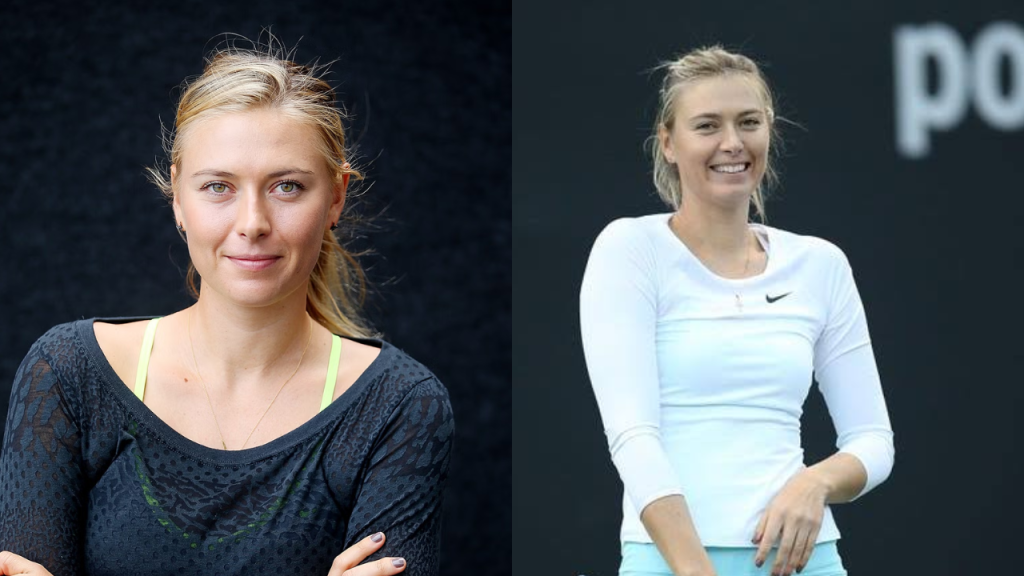
Maria Sharapova is one of the most recognizable names in modern tennis and one of the few women to complete a career Grand Slam. Born in Russia and raised partly in the United States, she transformed an ambitious childhood dream into a professional career that lasted nearly two decades. Her powerful baseline game, competitive personality, and ability to perform under pressure helped her win five Grand Slam singles titles, 36 WTA singles titles, and the Olympic silver medal in 2012. She also reached the WTA World No. 1 ranking and became a global sports and business personality. After retiring from professional tennis in 2020, Sharapova continued developing her interests outside sport and was inducted into the International Tennis Hall of Fame in 2025.
Who Is Maria Sharapova?
Maria Sharapova is a former Russian professional tennis player who became famous as a teenage Grand Slam champion. She competed primarily as a right-handed player with a two-handed backhand and built her reputation around powerful groundstrokes, mental toughness, and an aggressive competitive style. Sharapova reached the highest ranking in women’s tennis, becoming World No. 1 in 2005, and returned to the top position several times during her career. She finished with 36 singles titles, a 645–171 career singles record, and five major championships. Her Grand Slam victories came at Wimbledon, the US Open, the Australian Open, and Roland-Garros, making her one of the select players in tennis history to win all four majors.
Maria Sharapova Age and Birth Details
Maria Sharapova was born on April 19, 1987, in Nyagan, Russia. As of 2026, she is 39 years old. Her early childhood took place during a period of major change in the former Soviet Union, and her family later made a difficult decision that would shape her future. Sharapova’s father, Yuri, recognized her potential and eventually moved with her to Florida so that she could receive higher-level tennis training. The family faced significant financial and language challenges during the transition. According to the International Tennis Hall of Fame, Yuri and seven-year-old Maria arrived in Florida in 1994 with only about $700 and limited English. That sacrifice became an important part of the story behind her rise to international tennis fame.
Maria Sharapova’s Family and Parents
Family played a major role in Maria Sharapova’s tennis journey, particularly her relationship with her father, Yuri Sharapov. He accompanied her to the United States and worked to create opportunities for her development as a professional athlete. Her mother, Yelena, remained an important influence in her life and later received public recognition from Sharapova for the values she passed on to her daughter. The move to America required the family to make substantial personal and financial sacrifices. Sharapova’s success therefore cannot be separated from the support she received during her childhood. Her father’s commitment to her training became especially visible during the early years at the IMG Academy in Bradenton, Florida, where she developed the skills that eventually carried her onto the biggest stages in tennis.
Childhood and Early Tennis Training
Sharapova’s path toward professional tennis began when she was still a young child. A major turning point came after Martina Navratilova noticed her talent at a tennis clinic and recommended that she pursue professional training in the United States. Sharapova later attended the IMG Academy in Bradenton, Florida, where she trained under experienced coaches and competed against increasingly strong junior players. Her development was remarkably fast. At age 13, she won the Girls’ 16 division at the Eddie Herr International Junior Tennis Championships, and she later reached major junior tournament finals. She officially turned professional at just 14 years old, beginning a career that would eventually span almost 20 years. Her early training established the discipline and competitive mindset that became central to her identity as an athlete.
Maria Sharapova’s Professional Tennis Beginning
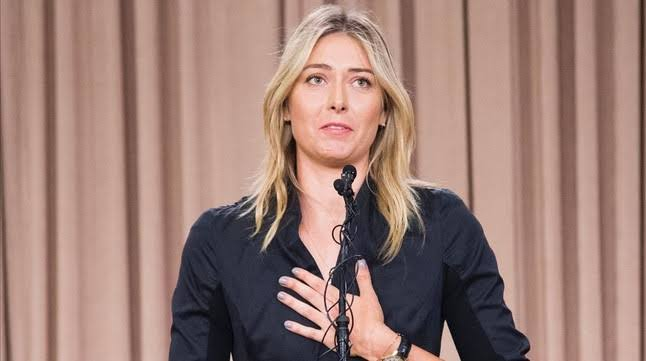
Sharapova’s transition from junior tennis to the professional circuit happened quickly. She played her first professional event in 2001, and her progress accelerated over the next two years. In 2003, she won her first WTA-level titles at the Japan Open and the Bell Challenge in Quebec City and received the WTA Newcomer of the Year award. Her ranking also improved dramatically as she gained experience against established players. Rather than relying only on youth and athletic ability, Sharapova developed a style based on powerful hitting, aggressive court positioning, and intense concentration. These qualities made her increasingly difficult to handle on the biggest stages. By the time she reached Wimbledon in 2004, she was no longer viewed simply as a promising teenager; she had become a serious contender capable of challenging the world’s best players.
Wimbledon 2004: Maria Sharapova’s Breakthrough
The defining breakthrough of Maria Sharapova’s early career came at Wimbledon in 2004. At only 17 years old, she reached the final and faced defending champion Serena Williams. Sharapova produced one of the most memorable performances of her career, defeating Williams in straight sets to win her first Grand Slam championship. The victory immediately transformed her from a rising young player into an international sports star. It also made her the first Russian woman to win the Wimbledon singles title. The achievement demonstrated that Sharapova could handle enormous pressure and compete successfully against established champions. Her Wimbledon triumph became the foundation of a remarkable decade that included four more major singles championships and eventually made her one of the most commercially successful athletes in the world.
Rise to World No. 1
Following her Wimbledon breakthrough, Sharapova continued climbing the women’s tennis rankings. In August 2005, she reached the World No. 1 ranking for the first time at just 18 years old. Reaching the top of the rankings confirmed that her Wimbledon victory was not a one-time achievement. She remained among the strongest players on tour and repeatedly competed deep into major tournaments. Her ranking career included multiple returns to the No. 1 position as her results changed throughout different seasons. Sharapova’s rise was particularly impressive because women’s tennis during this period featured several elite competitors, including Serena and Venus Williams, Justine Henin, and other Grand Slam champions. Her ability to remain competitive across different playing surfaces became one of the defining features of her long career.
US Open 2006 and Australian Open 2008
After winning Wimbledon, Sharapova added more major titles to her collection. In 2006, she captured the US Open, defeating Justine Henin in the final. Two years later, she won the Australian Open in 2008, defeating Ana Ivanovic in the championship match. These victories demonstrated her ability to succeed on different surfaces and in different tournament conditions. The Australian Open title was especially significant because it came after a period in which she had dealt with physical challenges and continued developing her game. Her Grand Slam collection was now spread across three different major tournaments. Although injuries later interrupted her career, these victories established Sharapova as a complete championship-level player rather than simply a Wimbledon specialist. Her determination to keep improving became increasingly important as she faced new physical and competitive challenges.
Shoulder Injury and Career Comeback
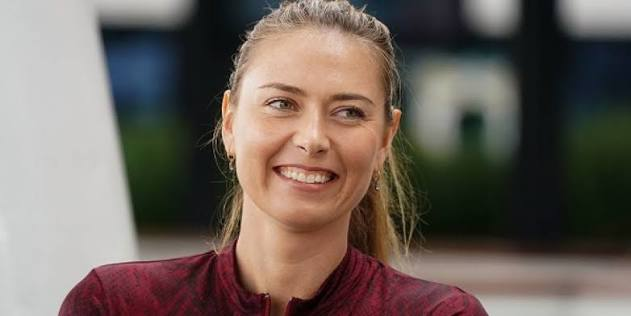
One of the most difficult periods of Maria Sharapova’s career followed her 2008 Australian Open victory. A serious shoulder problem eventually required surgery and forced her to spend significant time away from competition. For an elite athlete, such an interruption can permanently change a career, but Sharapova worked to rebuild her physical condition and tennis game. Her comeback required adjustments to her playing style and extensive rehabilitation. Instead of allowing the injury to define the final stage of her career, she returned to the tour and eventually achieved some of her greatest results. Her recovery became an important example of her resilience. The experience also changed her relationship with tennis, requiring her to manage her body more carefully while continuing to compete against younger and highly talented opponents.
Roland-Garros Titles and Career Grand Slam
Sharapova completed her career Grand Slam by winning the French Open at Roland-Garros in 2012. The victory was particularly meaningful because clay had once been viewed as one of the more challenging surfaces for her game. She defeated Sara Errani in the final and became one of the select women to win all four major tournaments during her career. Sharapova returned to the Roland-Garros final two years later and won the championship again in 2014, defeating Simona Halep. These two French Open titles proved that her game could adapt successfully to slow clay courts as well as grass and hard courts. Her 2012 achievement placed her among the small group of women who had completed the career Grand Slam in singles, a distinction that remains central to her legacy.
Olympic Silver Medal in 2012
The 2012 London Olympics added another major achievement to Sharapova’s career. She reached the women’s singles final and earned a silver medal after losing to Serena Williams. The Olympic result was historically important because it gave Sharapova a medal at the world’s largest multi-sport event and completed another significant milestone in her career. Representing Russia on the Olympic stage added a national dimension to her already international profile. By that stage, she had already won Wimbledon, the US Open, and the Australian Open, and she would soon complete her career Grand Slam at Roland-Garros. The Olympic silver medal therefore became part of a remarkable 2012 season and reinforced her reputation as one of the leading athletes of her generation.
Playing Style and Competitive Mindset
Maria Sharapova’s playing style was built around power, aggression, and concentration. She was particularly known for striking the ball hard from the baseline and using depth and pace to pressure opponents. Her competitive mindset was equally important. Even when matches became physically demanding or emotionally difficult, she was known for maintaining an intense focus on the next point. Her famous on-court intensity, including her loud grunting during rallies, became one of the recognizable characteristics of her matches. Sharapova also developed strong tactical skills over time, particularly on clay, where she eventually became highly successful. Her career record of 645 wins and 171 losses reflects the consistency that supported her five Grand Slam championships and 36 WTA singles titles.
Rivalry With Serena Williams
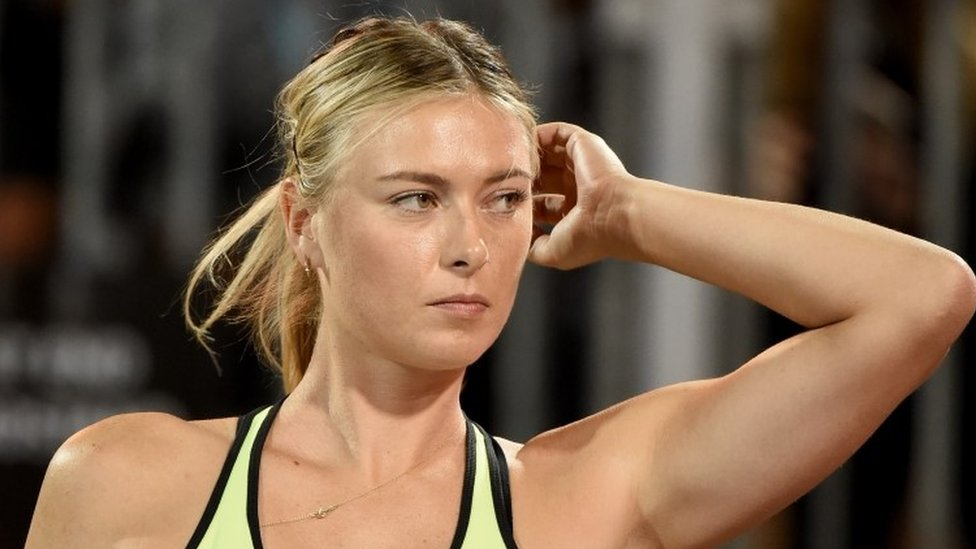
The relationship between Maria Sharapova and Serena Williams became one of the most discussed rivalries in women’s tennis. Sharapova famously defeated Williams in the 2004 Wimbledon final, but Williams later dominated their head-to-head meetings. Their rivalry included Grand Slam finals, major semifinal encounters, and years of attention from international media. Despite the competitive history, their relationship evolved over time. Serena Williams later introduced Sharapova at her 2025 International Tennis Hall of Fame induction, reflecting how their relationship had changed beyond their years as fierce competitors. Their rivalry helped define an important period in women’s tennis because both athletes combined exceptional sporting achievements with major global profiles. Sharapova’s 2004 victory remains one of the most famous wins of her career, even though Williams ultimately held the advantage in their overall meetings.
Business Career and Sugarpova
Beyond tennis, Maria Sharapova became known for her business interests and strong personal brand. One of her best-known ventures was Sugarpova, a premium candy company launched in 2013. The business reflected her willingness to build opportunities outside professional sport while she was still an active competitor. Sharapova also developed commercial partnerships with major international companies throughout her playing career. Her ability to connect athletic success with fashion, beauty, lifestyle, and entrepreneurship helped make her one of the most marketable female athletes of her era. The business side of her career became especially important after injuries reduced her time on court. Instead of treating retirement as an ending, Sharapova used the skills and global recognition developed through tennis to explore new professional interests and investments.
Maria Sharapova’s Personal Life and Motherhood
After retiring from professional tennis, Sharapova entered a new stage of her personal life. She and Alexander Gilkes announced their engagement in 2020, and in 2022 Sharapova announced the birth of their son, Theodore. His birth marked an important personal milestone after decades of intense athletic competition. Sharapova had previously spoken about the possibility of enjoying a slower and more personal life after tennis, including spending time with family and choosing different types of workouts and activities. Motherhood added another dimension to her post-tennis identity. Although she remains closely connected to the tennis world, her life is no longer organized around tournament schedules, training sessions, and professional competition. Her transition demonstrates how elite athletes can build new identities after retiring from the sport that defined their early adulthood.
Maria Sharapova’s Retirement From Tennis
In February 2020, Sharapova announced her retirement from professional tennis at the age of 32. Her final competitive match came at the 2020 Australian Open, where she lost in the first round to Donna Vekic. Persistent shoulder problems played a major role in her decision. By the end of her career, she had spent almost two decades competing professionally and had undergone multiple procedures related to her shoulder. She retired with five Grand Slam singles titles, 36 WTA singles titles, a career Grand Slam, an Olympic silver medal, and 21 weeks at No. 1, according to the WTA’s retirement statistics. Her retirement marked the conclusion of one of the most recognizable careers of the 2000s and 2010s.
Maria Sharapova After Retirement
Retirement did not remove Sharapova from the public eye. Instead, it allowed her to focus on business, family, philanthropy, and other interests without the demanding schedule of professional tennis. Her experience as an athlete and entrepreneur gave her a broad platform outside competition. She has also remained connected to tennis through major events and the sport’s global community. Her post-retirement years have shown a different side of her personality, with greater attention to family life and long-term professional projects. Rather than attempting to recreate her playing career, Sharapova has embraced the idea of building a new chapter. This transition is important because modern athletes increasingly develop careers that extend beyond competition, and Sharapova’s experience provides a strong example of that broader approach.
International Tennis Hall of Fame Induction
A major recognition arrived in 2025, when Maria Sharapova was inducted into the International Tennis Hall of Fame as part of the Class of 2025. The honor formally recognized her place among the sport’s greatest players. The Hall of Fame notes that Sharapova is one of only ten women in tennis history to complete a career singles Grand Slam, highlighting the rarity of her achievement. During the induction ceremony in Newport, Serena Williams introduced Sharapova, creating a powerful moment connecting two athletes whose careers had been closely linked for more than two decades. Sharapova later received her official Hall of Fame ring at the US Open. The honor added a prestigious final chapter to a career that had already included five major titles and the No. 1 ranking.
Maria Sharapova’s Legacy in Tennis
The legacy of Maria Sharapova extends beyond her trophy collection. She became an important figure in a generation of women’s tennis that attracted enormous worldwide attention. Her journey from a young Russian girl to a Grand Slam champion demonstrated the importance of ambition, discipline, sacrifice, and resilience. She also helped show how a successful athlete could develop a major identity outside competition through business, fashion, advertising, and philanthropy. Statistically, her career is impressive: 36 singles titles, five Grand Slam championships, 645 singles victories, and a career Grand Slam. Her Hall of Fame induction confirms the historical significance of those accomplishments. For younger athletes, her story remains especially relevant because it combines sporting excellence with the challenges of injuries, reinvention, public expectations, and life after professional competition.
Conclusion
Maria Sharapova’s life story is a story of ambition, sacrifice, resilience, and reinvention. From leaving Russia as a child and training in Florida to winning Wimbledon at 17, becoming World No. 1, completing a career Grand Slam, and earning an Olympic silver medal, she created one of tennis’s most memorable careers. Injuries repeatedly tested her, but she returned to the sport and captured additional major titles, including two French Open championships. After retiring in 2020, Sharapova moved toward business, family, and other interests. Her 2025 International Tennis Hall of Fame induction confirmed her lasting place in tennis history. Today, her legacy is not defined only by trophies but also by the determination and adaptability that allowed her to succeed across different stages of life.
FAQs
How old is Maria Sharapova?
Maria Sharapova was born on April 19, 1987, in Nyagan, Russia. As of 2026, she is 39 years old. She retired from professional tennis in February 2020 at age 32 after a career lasting almost two decades.
How many Grand Slam titles did Maria Sharapova win?
Maria Sharapova won five Grand Slam singles titles. She won Wimbledon in 2004, the US Open in 2006, the Australian Open in 2008, and Roland-Garros in 2012 and 2014. These victories gave her a career Grand Slam.
Was Maria Sharapova ever World No. 1?
Yes. Maria Sharapova reached the WTA World No. 1 ranking in August 2005. She spent a total of 21 weeks at the top of the singles rankings during her career, according to the WTA.
Why did Maria Sharapova retire?
Sharapova retired in February 2020, largely because persistent shoulder injuries and surgeries made it increasingly difficult for her to compete at the highest level. Her final match was at the 2020 Australian Open.
Does Maria Sharapova have children?
Yes. Maria Sharapova and Alexander Gilkes welcomed their first child, a son named Theodore, on July 1, 2022. Sharapova announced his birth publicly in July 2022.
When was Maria Sharapova inducted into the Hall of Fame?
Maria Sharapova was inducted into the International Tennis Hall of Fame in 2025. She was part of the Class of 2025 and received the honor in Newport, Rhode Island, in August 2025.
What is Maria Sharapova best known for?
Maria Sharapova is best known for being a five-time Grand Slam champion, former World No. 1, Olympic silver medalist, and career Grand Slam winner. She is also recognized for her successful transition into business and her global influence beyond tennis.
Pingback: Lily Collins: Biography, Career, Movies, Emily in Paris & Life - Bills Game