

Introduction
Dorothy Bowles Ford is a private American woman whose name became connected with one of the most recognized political families in Memphis, Tennessee. She is best known as the former wife of Harold E. Ford Sr., who represented Tennessee in the U.S. House of Representatives for more than two decades, and as the mother of Harold Ford Jr., who later succeeded his father in Congress. Unlike the men in her family, Dorothy did not seek elected office or build a major public career. Instead, much of her story developed through family life, professional work, and her connection to the Congressional Black Caucus community. An official Congressional Black Caucus Foundation publication from 1992 also includes a labeled portrait of Dorothy, documenting her place among congressional spouses.
Who Is Dorothy Bowles Ford?
Dorothy Bowles Ford is primarily known through her connection to the Ford political family. Public records identify her as the wife of Harold Ford Sr. during his congressional career and the mother of Harold Ford Jr., who later served in the same Memphis-area congressional seat. The U.S. House Office of History and Art identifies Harold Ford Jr. as the eldest son of Harold Eugene and Dorothy Bowles Ford. Her own public biography remains limited because she has generally maintained a private life. This makes it important to separate documented information from repeated claims on biography websites. Dorothy did not serve as a member of Congress herself. Her historical significance instead comes from her family, her professional life, and her presence within a prominent African American political network.
Early Life and Background
Reliable public sources provide relatively little information about Dorothy Bowles Ford’s early life. Her exact birth date, detailed childhood history, parents, siblings, and early education are not firmly established in authoritative public records. Several online biography pages give approximate birth years, but these claims are not supported strongly enough to present as confirmed facts. A responsible biography should therefore avoid assigning Dorothy a specific date of birth without reliable documentation. What is much better documented is her later connection with Memphis political life through her marriage to Harold Ford Sr. and the upbringing of their children. This limited public record also reflects Dorothy’s preference for privacy. Unlike politicians whose careers produce extensive archives, her personal history has remained largely outside newspapers, government biographies, and public interviews.
Dorothy Bowles Ford and Harold Ford Sr.
In 1969, Dorothy Bowles Ford married Harold E. Ford Sr. The Congressional Directory for the 104th Congress records the marriage and identifies their three children as Harold Jr., Newton Jake, and Sir Isaac. Harold Ford Sr. had already established himself in Tennessee politics before entering Congress. He served in the Tennessee House of Representatives and won election to the U.S. House in 1974, beginning a congressional career that lasted more than two decades. His political rise meant that family life developed alongside campaigns, public appearances, congressional responsibilities, and increasing national attention. Dorothy therefore lived through a period in which the Ford family became increasingly important in Memphis politics, even though she herself remained outside elected office and generally avoided the level of publicity associated with her husband.
Their Three Children
Dorothy and Harold Ford Sr. had three sons: Harold Ford Jr., Newton Jake Ford, and Sir Isaac Ford. The 1995 Congressional Directory provides this family information in its official biography of Harold Ford Sr. Their eldest son, Harold Ford Jr., became the most nationally recognized of the three. Born in Memphis on May 11, 1970, he later followed his father into Congress. The U.S. House specifically identifies him as the eldest son of Harold and Dorothy Bowles Ford. Newton Jake Ford also became involved in political and campaign activities, while much less public information exists about Sir Isaac Ford. Dorothy’s role as a mother therefore became an important part of a family story that eventually stretched across two generations of congressional service.
Dorothy Bowles Ford as Harold Ford Jr.’s Mother
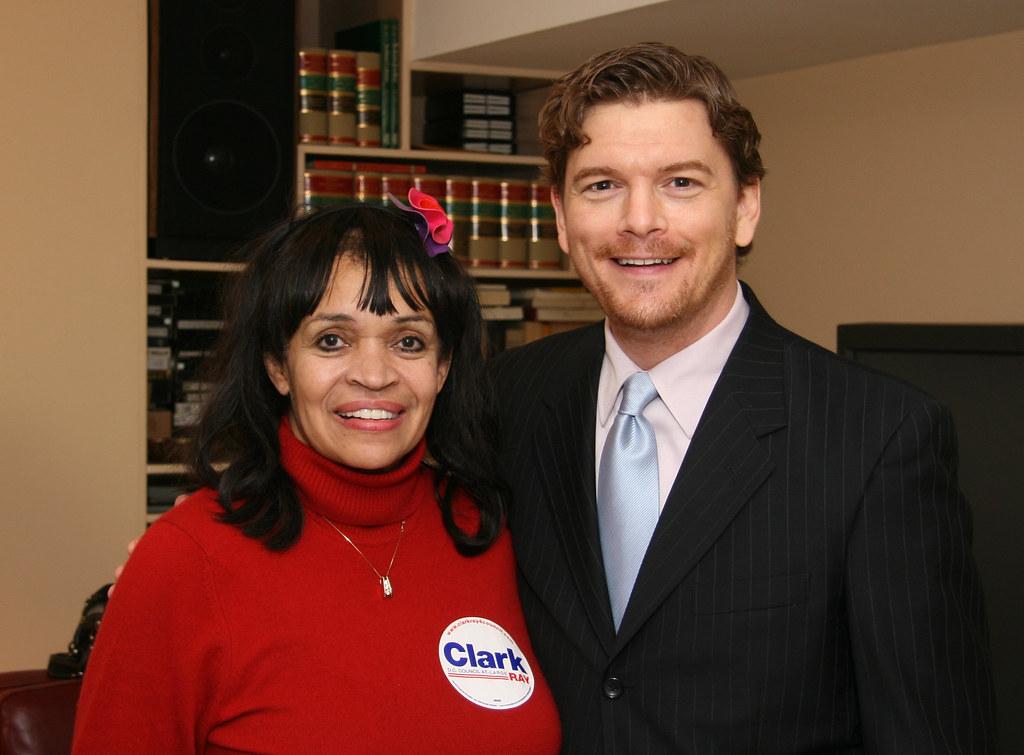
One of the most interesting documented details about Dorothy Bowles Ford comes from the official history of Harold Ford Jr. The U.S. House records that when Harold Jr. was four years old, he attended his father’s first congressional swearing-in ceremony. According to Dorothy’s recollection, the young boy raised his hand and said that becoming a congressman was what he wanted to do when he grew up. The story is significant because Harold Jr. eventually did follow that path. It also provides one of the rare moments in the congressional historical record where Dorothy herself appears as a source. Rather than relying on later internet biographies, this account connects her directly with a documented moment in her son’s early political life.
The Ford Family’s Congressional Legacy
The Ford family developed an unusual political legacy in Memphis, Tennessee. Harold Ford Sr. entered the U.S. House in the 1970s and represented the Memphis-based district for more than two decades. After he announced his retirement, Harold Ford Jr. ran for the seat and won election in 1996, beginning his congressional service in 1997. The House describes Ford Jr. as the successor to his father in the Memphis-based district. This succession made the Ford family one of the notable African American political families in modern Tennessee history. Dorothy did not hold public office, but her family position placed her at the center of this two-generation political story. Her connection to both congressmen helps explain why searches for her name frequently appear alongside searches for Memphis politics and Harold Ford Jr.
The 1992 Congressional Black Caucus Connection
A particularly valuable historical source for Dorothy Bowles Ford is a 1992 Congressional Black Caucus Foundation publication concerning congressional spouses. The document explains that the Congressional Black Caucus Spouses organization had been established in 1976 and focused strongly on education and community-oriented programs. Within the 1992 publication, Dorothy Bowles Ford appears by name among the congressional spouses, and the document contains a labeled black-and-white portrait of her. This is important because it provides direct archival evidence rather than relying on modern biography websites. Her inclusion shows that Dorothy was part of the organized community surrounding Congressional Black Caucus families during the period when Harold Ford Sr. was serving in Congress. It also confirms that her public presence, although limited, was documented in contemporary congressional material.
Her Role in the Congressional Spouses Community
The Congressional Black Caucus Spouses organization represented more than social appearances. Its historical material describes activities involving education, public-policy awareness, scholarship support, seminars, forums, and community programs. Dorothy Bowles Ford’s appearance in the 1992 publication places her within this broader network of spouses connected to Black members of Congress. However, available records do not provide enough evidence to assign her specific leadership duties within every program. This distinction matters when writing an accurate biography. It is reasonable to say that she belonged to the congressional spouses community and appeared in its historical publication. It would be less responsible to claim that she personally organized particular initiatives without supporting documentation. Her documented presence nevertheless adds an important dimension to understanding her life during the Ford family’s congressional years.
Professional Career
Several biographical sources describe Dorothy Bowles Ford as having worked for the Potomac Electric Power Company, commonly known as PEPCO, in Washington, D.C. Her position is frequently described as involving consumer coordination and regulatory functions. Because detailed employment records are not widely available in authoritative public archives, specific claims about her responsibilities should be treated cautiously. What can be reasonably stated is that Dorothy had a professional identity separate from her husband’s political career. This is an important part of her biography because online profiles sometimes reduce her entirely to the label of “Harold Ford Jr.’s mother.” Her reported professional work shows why that description is incomplete. She was connected to a major political family while also maintaining a working life of her own.
Life in Washington, D.C.
Harold Ford Sr.’s congressional career eventually brought the family into the Washington, D.C., environment. The U.S. House biography of Harold Ford Jr. notes that the family moved to Washington in the late 1970s, after his father entered Congress. This transition exposed the Ford children to a different environment from Memphis and placed the family closer to the center of national politics. Harold Jr. later attended St. Albans School for Boys in Washington and developed educational and political interests that eventually led him to the University of Pennsylvania and the University of Michigan Law School. Dorothy’s life during these years is not extensively documented, but she was part of the family environment in which her children grew up. Her story therefore intersects with a major period of the Ford family’s development.
Harold Ford Jr.’s Education and Political Development
The achievements of Harold Ford Jr. help explain why Dorothy Bowles Ford remains relevant to biographical searches today. Harold Jr. graduated from the University of Pennsylvania in 1992 with a degree in history and later earned a law degree from the University of Michigan School of Law in 1996. Official congressional records document these educational milestones. Before entering Congress, he worked on political campaigns and held positions connected to government and public policy. His early exposure to politics was partly shaped by growing up in a congressional family. Dorothy’s recollection of his childhood ambition provides a personal perspective on that development. While it would be excessive to claim that she alone created his political career, her place as his mother was clearly part of the family environment that surrounded his formative years.
Harold Ford Sr.’s Political Career
To understand Dorothy Bowles Ford’s family legacy, it is necessary to understand Harold Ford Sr.’s political career. He won election to Congress in 1974 and represented Tennessee’s 9th District beginning in 1975. The Congressional Directory identifies his Memphis background, his Tennessee legislative experience, and his family connection to Dorothy. He remained in Congress for more than two decades and became one of Tennessee’s prominent African American political figures. His career covered major changes in American politics and the Democratic Party. Dorothy’s marriage to Ford Sr. placed her within this political history for many years. Yet she did not become a politician herself. Her story is therefore better understood as the story of a private family member living alongside a long-running public career.

Divorce and Later Privacy
Public records and secondary biographies commonly report that Dorothy Bowles Ford and Harold Ford Sr. divorced in 1999. The precise circumstances of their separation have not been documented extensively in authoritative sources, and speculation should therefore be avoided. What is clearer is that Dorothy subsequently maintained a low public profile. Unlike her former husband and son, she did not build a career based on media appearances or elected office. This privacy makes reliable information about her later years relatively limited. It is important not to confuse a lack of public information with a lack of personal significance. Many people connected to political families choose lives away from cameras and headlines. Dorothy’s later privacy is one of the defining characteristics of her public biography.
Dorothy Bowles Ford in the Public Record
Although Dorothy generally avoided the spotlight, she is not absent from historical records. Her name appears in Congressional Directories, congressional family histories, and the 1992 Congressional Black Caucus Foundation publication. The official House history also identifies her as the mother of Harold Ford Jr. and preserves her recollection of his childhood political ambition. These sources provide a more reliable foundation for her biography than unsupported celebrity-style websites. They also demonstrate how a person can have historical importance without holding public office. Dorothy’s documented connection to congressional life is meaningful precisely because it captures the family and community side of American political history. Her story is therefore best approached through verified records and careful distinction between confirmed facts and unverified online claims.
Public Image and Historical Importance
The public image of Dorothy Bowles Ford has largely been shaped by her family connections. She is frequently described as Harold Ford Jr.’s mother and Harold Ford Sr.’s former wife, but those descriptions only tell part of the story. Her appearance in the 1992 Congressional Black Caucus Foundation material shows that she was also part of a broader community of families connected to Black congressional leadership. Her professional career, motherhood, and private life add further dimensions. At the same time, responsible biography writing should avoid turning limited evidence into dramatic claims about political influence. Dorothy’s significance is quieter. She represents the family and community dimension of political history, where people can contribute to stability, education, and continuity without becoming elected officials themselves.
Legacy of Dorothy Bowles Ford
The legacy of Dorothy Bowles Ford is closely connected to the Ford family’s political history but should not be reduced to it. She was married to a longtime congressman, raised three sons, and became the mother of another congressman who succeeded his father. Official records preserve her name and even a personal recollection that gives insight into her son’s childhood. The 1992 Congressional Black Caucus Foundation publication provides another important piece of evidence by documenting her participation in the congressional spouses community. Her story ultimately demonstrates how political history includes people who rarely stand at podiums. Dorothy’s contribution was largely connected to family, professional life, and community presence, making her an interesting figure in the broader history of Memphis and African American political leadership.
Conclusion
Dorothy Bowles Ford remains a relatively private figure, but her life is closely connected to an important chapter in American political history. As the former wife of Harold Ford Sr. and mother of Harold Ford Jr., she belonged to a family that produced two generations of representatives from the Memphis area. Official congressional records confirm her place in that family and preserve a memorable story she shared about her son’s childhood political ambitions. The 1992 Congressional Black Caucus Foundation publication adds another valuable historical record by featuring her name and labeled portrait among congressional spouses. While many details of Dorothy’s personal life remain private, the documented record presents her as an important part of the family and community story behind the Ford political legacy.
FAQs
1. Who is Dorothy Bowles Ford?
Dorothy Bowles Ford is best known as the former wife of Harold E. Ford Sr. and the mother of former Congressman Harold Ford Jr. The U.S. House identifies Harold Jr. as the eldest son of Harold and Dorothy Bowles Ford.
2. Was Dorothy Bowles Ford a politician?
No. Dorothy Bowles Ford did not serve as a member of Congress. Her public significance comes from her family, professional life, and connection to the congressional spouses community.
3. Who was Dorothy Bowles Ford married to?
She married Harold E. Ford Sr. in 1969. The Congressional Directory records their marriage and identifies their three sons as Harold Jr., Newton Jake, and Sir Isaac.
4. Who is Dorothy Bowles Ford’s most famous child?
Her eldest son, Harold Ford Jr., is the best-known publicly. He served in the U.S. House from 1997 to 2007 after succeeding his father in the Memphis-area congressional district.
5. Does a historical photo of Dorothy Bowles Ford exist?
Yes. A 1992 Congressional Black Caucus Foundation publication contains a labeled black-and-white portrait of Dorothy Bowles Ford among photographs of congressional spouses.
6. Where did Dorothy Bowles Ford work?
Multiple secondary sources describe her as having worked at Potomac Electric Power Company (PEPCO) in consumer and regulatory-related functions. Because detailed primary employment records are limited, specific job claims should be presented cautiously.
7. What is Dorothy Bowles Ford known for today?
Today, Dorothy Bowles Ford is primarily remembered through the Ford political family legacy, especially her connection to Harold Ford Sr. and Harold Ford Jr. Her documented appearance in congressional historical material also makes her part of the broader history of Black congressional families in the United States