
Introduction
A well-designed kitchen does more than make cooking easier. It can become the social center of a home, a practical workspace, a place for family meals, and even an area for relaxation. The best kitchen design ideas balance appearance with everyday function, helping homeowners create spaces that feel attractive without becoming difficult to use. In 2026, kitchen planning is moving toward warmer materials, smarter storage, personalized layouts, natural colors, and stronger connections between the kitchen and surrounding living spaces. The National Kitchen & Bath Association (NKBA) reports that whole-home continuity, multifunctional spaces, storage maximization, smart technology, organic aesthetics, and wellness are major themes shaping kitchen design.
Start With the Right Kitchen Layout
One of the most important kitchen design ideas is choosing a layout before selecting colors, cabinets, or decorative features. A beautiful kitchen can still feel uncomfortable if the main work areas sit too far apart or create unnecessary movement. Common layouts include one-wall, galley, L-shaped, U-shaped, and island-based kitchens. Your room dimensions, household size, cooking habits, and available storage should guide the decision. Think carefully about how you move between the refrigerator, sink, preparation area, and cooking zone. A compact kitchen may benefit from a simple galley arrangement, while a larger room can support an island or peninsula. Good planning creates a natural workflow and allows the kitchen to remain comfortable during busy cooking sessions.
Choose a Kitchen Style That Fits Your Home
Kitchen style sets the visual direction for every later decision. Popular approaches include modern, contemporary, traditional, transitional, farmhouse, industrial, minimalist, and organic-inspired designs. Transitional kitchens remain especially relevant because they combine classic details with modern simplicity. According to the NKBA’s 2026 research, transitional and timeless design was identified by 72% of surveyed professionals as a popular style for the coming years, followed by contemporary, modern, and minimalist approaches. Instead of copying a trend completely, choose elements that match your home’s architecture. A traditional house may look better with framed cabinets and classic hardware, while a modern apartment could benefit from flat doors, clean surfaces, and integrated appliances.
Explore Modern Kitchen Design Ideas
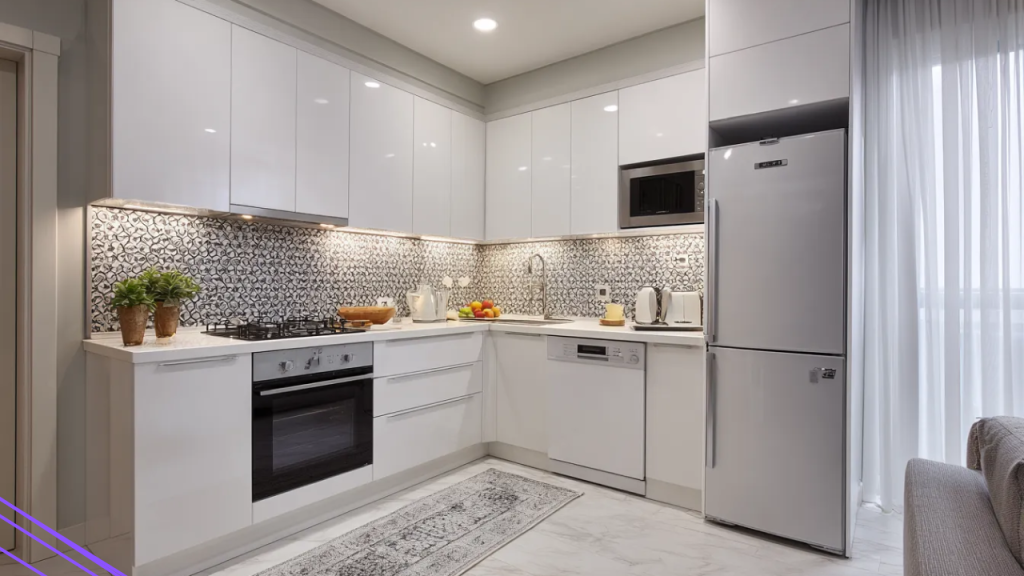
Modern kitchen design ideas often focus on clean lines, practical surfaces, minimal decoration, and efficient storage. However, modern does not have to mean cold or completely white. Today’s kitchens increasingly combine simple forms with warm wood, textured surfaces, natural stone, and soft lighting. Flat-panel cabinets can create a streamlined appearance, while integrated appliances help reduce visual clutter. The NKBA’s 2026 findings indicate growing interest in flat slab cabinet doors, panel-faced refrigerators, integrated dishwashers, and solid-surface backsplashes. A modern kitchen also works well when different materials provide contrast. For example, smooth cabinetry can pair with a textured stone backsplash, while wood accents can add warmth to an otherwise minimalist space.
Make Small Kitchens Feel Larger
Small rooms can benefit greatly from thoughtful kitchen design ideas because every surface needs to perform a useful role. Start by reducing visual clutter and selecting cabinets that use vertical space efficiently. Floor-to-ceiling storage can provide valuable capacity without requiring a larger footprint. Light colors, reflective surfaces, glass-front cabinets, and carefully positioned lighting can also make a compact kitchen feel more open. A narrow peninsula may provide both preparation space and seating without consuming as much room as a full island. Houzz’s 2026 kitchen research shows that many homeowners are improving functionality without necessarily making their kitchens larger. This reinforces an important principle: better planning can often improve a kitchen more effectively than simply adding square footage.
Select Cabinets for Beauty and Storage
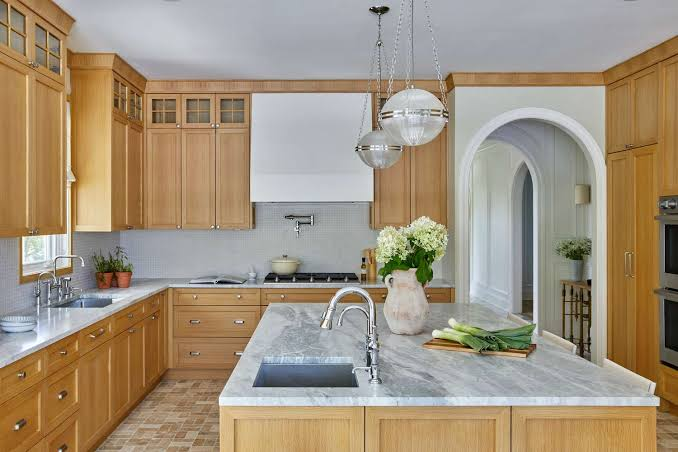
Cabinets influence both the appearance and usability of a kitchen. When comparing kitchen design ideas, consider door style, material, color, internal storage, hardware, and cabinet height together. In 2026, natural wood cabinetry has become especially popular. Houzz reported that 29% of renovating homeowners selected wood cabinets, placing wood ahead of white at 28% in its 2026 U.S. Kitchen Trends Study. White oak is also prominent in professional design research. Beyond appearance, drawers can make frequently used items easier to access, while tall cabinets can store less frequently used equipment. Pull-out organizers, corner storage, tray dividers, and dedicated pantry sections can make ordinary cabinets much more useful.
Use Kitchen Islands as Functional Centers
A kitchen island can become one of the most useful features in a home when its size and purpose match the room. Rather than treating an island purely as decoration, decide whether it will provide food preparation, storage, seating, cooking, washing, entertaining, or several functions together. Larger islands can include drawers, cabinets, electrical outlets, or appliance zones. Smaller kitchens may benefit from a compact movable island or peninsula. Current design research shows that islands are increasingly becoming multifunctional hubs, while breakfast bars are also gaining importance as social spaces. Houzz’s 2026 Milan trend coverage highlights sculptural islands and breakfast bars as central elements that connect kitchen and living areas. The ideal island should improve movement rather than create an obstacle.
Pick Countertops That Match Your Lifestyle
Countertops must withstand daily cooking, cleaning, spills, heat, and frequent use, so appearance should never be the only consideration. Popular options include quartz, natural stone, quartzite, granite, solid surfaces, porcelain, and wood. Each material offers different characteristics related to maintenance, appearance, durability, and cost. The NKBA’s 2026 findings place quartz and natural quartzite among prominent countertop choices, with natural quartzite showing strong professional interest. When choosing a countertop, consider how often you cook and whether you prefer a low-maintenance surface or a material with natural variation. A simple cabinet design can support a dramatic countertop, while patterned cabinets may work better with a quieter surface. The goal is visual balance and practical performance.
Create an Attractive Backsplash
A backsplash provides an opportunity to add personality without changing the entire room. Among current kitchen design ideas, large-format slabs and simple surfaces are gaining attention because they create fewer visual interruptions and can make cleaning easier. Tile remains a flexible option, with choices ranging from classic subway patterns to handmade textures, geometric designs, and natural stone. Statement color can also appear on a backsplash when the rest of the kitchen uses restrained tones. NKBA’s 2026 research identifies slab or solid-surface backsplashes as a growing preference and notes that backsplashes are one of the areas where designers expect statement colors to appear. Before selecting a backsplash, consider the cabinets, countertop, lighting, and flooring together rather than choosing the tile in isolation.
Choose a Warm and Timeless Color Palette
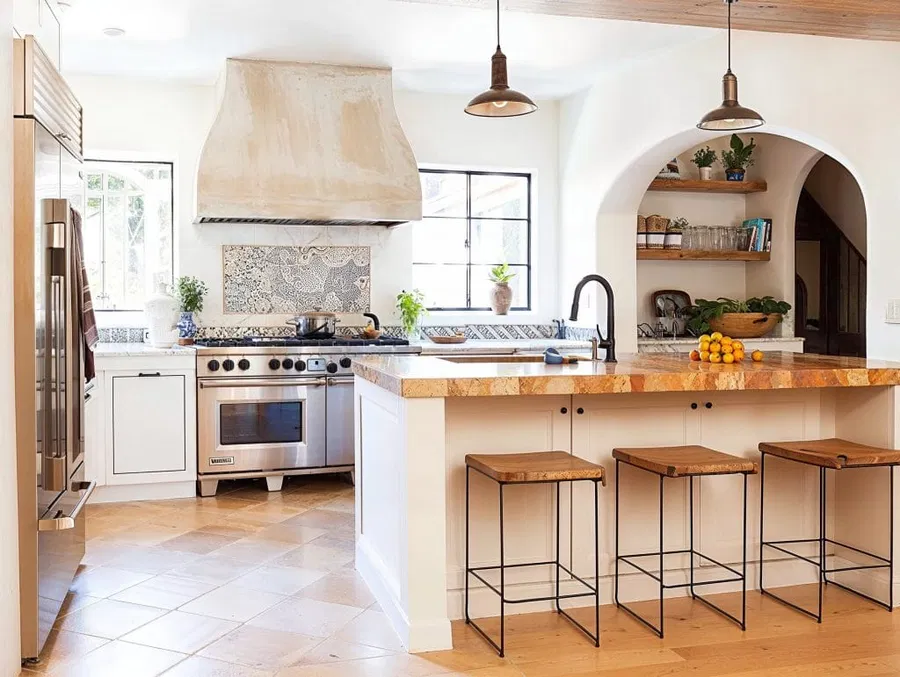
Color strongly influences how a kitchen feels. Neutral palettes remain popular because they create flexibility and allow homeowners to update accessories without replacing major components. However, today’s neutral kitchens increasingly use warm whites, beige, taupe, natural wood, muted greens, soft blues, and earthy shades instead of relying only on bright white. The NKBA’s 2026 report found that neutrals were identified as the most popular kitchen colors by 96% of surveyed professionals, while greens and blues also received strong support. You can introduce stronger colors through an island, backsplash, wallpaper, artwork, stools, or decorative objects. This approach makes the room easier to refresh because smaller elements can change without requiring a complete renovation.
Layer Different Types of Kitchen Lighting
Good lighting can transform even simple kitchen design ideas into a polished and functional space. A successful lighting plan usually combines ambient, task, accent, and decorative lighting. Ceiling fixtures can provide general illumination, while under-cabinet lights can brighten countertops where food preparation occurs. Pendant lights can highlight an island and create a visual focal point. Interior cabinet lighting can make stored items easier to find while adding a refined appearance. NKBA’s 2026 research found that natural lighting, quality lighting, and task lighting rank among the most important kitchen considerations, while under-cabinet, interior cabinet, and pendant lighting remain popular choices. Whenever possible, include multiple lighting controls so the atmosphere can change from bright daytime work to relaxed evening entertaining.
Improve Kitchen Storage With Smart Solutions
Storage is one of the most practical areas for improvement. Instead of simply adding more cabinets, consider how every cabinet will be used. Deep drawers can hold cookware, pull-out shelves can improve access, and tall pantry units can organize dry goods. Vertical storage can make use of otherwise wasted wall space. Dedicated locations for appliances can also prevent countertops from becoming crowded. The NKBA’s 2026 research identifies storage maximization as a major design theme, with interest in floor-to-ceiling cabinetry, drawers, walk-in and butler pantries, customized refrigerators, and islands with integrated storage. These solutions show why effective kitchen planning is not only about appearance. A room that looks beautiful but lacks convenient storage can quickly become frustrating in everyday use.
Add Natural Materials and Organic Details
Natural materials can make a kitchen feel warmer and more connected to the rest of the home. Wood cabinetry, stone countertops, natural textures, woven accessories, plants, and earthy colors can create an inviting environment without making the room feel overly decorated. Organic-inspired kitchen design ideas are especially relevant in 2026 because professional research shows strong interest in natural aesthetics. The NKBA identifies organic and natural design as one of the leading style directions, while white oak and natural stone continue to receive attention. Houzz also reports that wood cabinetry has become a leading choice among renovating homeowners. The strongest designs usually mix natural materials with practical modern elements, producing a kitchen that feels comfortable rather than overly themed.
Consider Smart Kitchen Technology
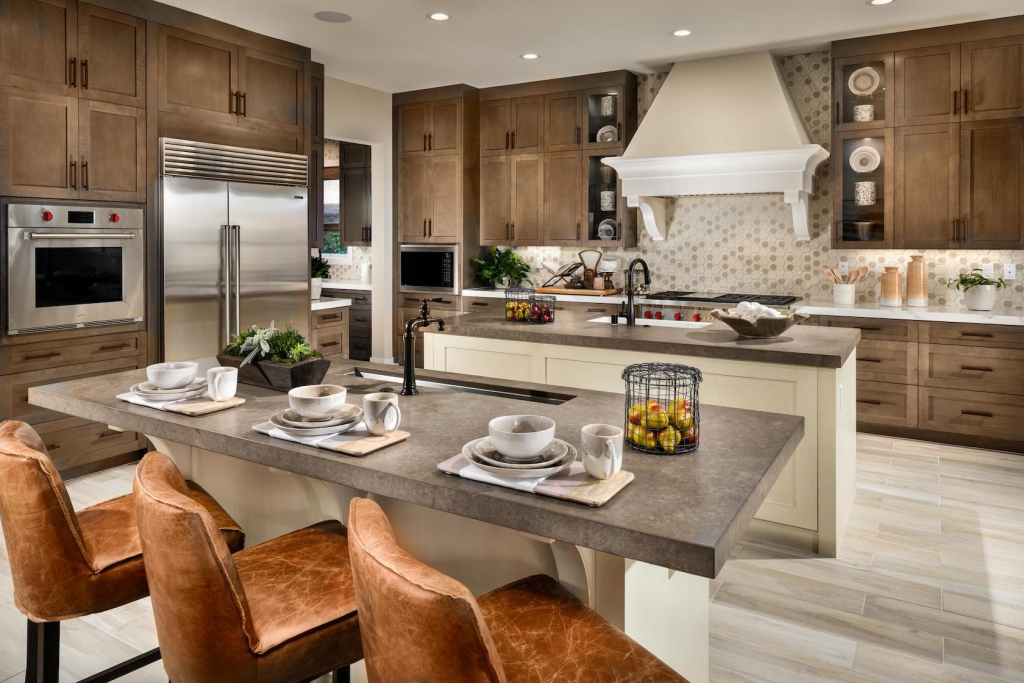
Smart technology can make a kitchen more convenient when it solves a genuine problem. Connected appliances, smart lighting, appliance monitoring, wireless charging, and voice-controlled features can support modern routines. However, technology should not dominate the design. Integrated appliances can help maintain clean visual lines, while hidden charging stations can prevent cables from covering countertops. NKBA’s 2026 research identifies smart technology integration as an important growth area, including Wi-Fi-enabled appliances, mobile-controlled lighting, and embedded wireless charging. The best approach is to select technology based on how your household actually operates. A useful smart feature should save time, improve convenience, increase accessibility, or make the kitchen easier to manage rather than existing simply because it is fashionable.
Design a Kitchen for Entertaining
Modern kitchens increasingly function as social spaces rather than isolated cooking rooms. If you frequently host family or friends, consider seating, circulation, beverage storage, lighting, and clear preparation zones when exploring kitchen design ideas. An island with comfortable seating can encourage guests to stay nearby without standing directly in the cooking area. A dedicated coffee or beverage station can reduce traffic around the main preparation zone. NKBA’s 2026 research identifies dedicated beverage areas, eat-in kitchens, and multifunctional spaces as important lifestyle features. Houzz’s research also shows that homeowners continue to prioritize functional improvements during renovation. A social kitchen should therefore support conversation while preserving enough workspace for the person preparing food.
Make the Kitchen Easier to Maintain
Beautiful materials are only useful if they remain practical after years of everyday use. When comparing kitchen options, think about cleaning requirements, durability, fingerprints, stains, water exposure, and access to difficult corners. Large-format backsplash surfaces can reduce grout lines, while durable countertops can simplify routine maintenance. Handleless or minimalist designs may look clean but should still provide comfortable access to cabinets and drawers. Choosing finishes with your lifestyle in mind can prevent unnecessary maintenance. Families with young children may prefer durable, easy-clean surfaces, while frequent cooks may prioritize resilient countertops and strong ventilation. A thoughtful design considers what the kitchen will look like after years of real use, not only how it appears on the day the renovation is completed.
Connect the Kitchen With the Rest of the Home
One of the strongest current kitchen design ideas is creating visual continuity between the kitchen and adjacent living spaces. Matching or complementary flooring, coordinated colors, repeated materials, and consistent lighting can make separate rooms feel like one connected environment. This approach is becoming more important as kitchens take on social and multifunctional roles. NKBA’s 2026 research emphasizes whole-home continuity and reports strong interest in kitchens that connect with other living spaces. Houzz’s coverage of EuroCucina 2026 similarly describes kitchens becoming increasingly integrated with surrounding living areas through shared colors, forms, and materials. The result can feel more spacious, organized, and intentional without requiring major structural changes.
Plan for Comfort, Accessibility, and Wellness
A kitchen should work comfortably for the people who use it today and, ideally, remain adaptable as their needs change. Comfortable work heights, easy-to-open drawers, good lighting, clear pathways, and accessible storage can improve everyday usability. Wellness-focused features may include better ventilation, healthier cooking methods, natural light, organized storage, and spaces that encourage family interaction. NKBA’s 2026 research identifies health and wellness as a significant kitchen design theme and notes growing interest in features such as powerful ventilation, steam cooking, enhanced storage, and stronger connections to outdoor areas. These ideas demonstrate that a successful kitchen is not simply attractive. It should support comfortable routines, safe movement, healthy habits, and the changing needs of the household.
Balance Trends With Timeless Kitchen Design
Following every trend can make a renovation expensive and difficult to update. A smarter strategy is to use durable elements for the foundation and introduce current trends through replaceable details. Cabinets, flooring, countertops, and plumbing fixtures can remain relatively timeless, while paint, stools, lighting accessories, artwork, and hardware can provide personality. Transitional design works particularly well because it can combine traditional and modern influences without becoming tied to one short-lived style. NKBA’s 2026 research identifies transitional and timeless kitchens as the leading style direction among surveyed professionals. When reviewing kitchen design ideas, ask whether you would still enjoy the feature several years from now. A timeless kitchen should feel current without depending entirely on what happens to be fashionable in one particular year.
Create a Realistic Kitchen Renovation Budget
Budget planning should happen before selecting expensive finishes or appliances. Divide the project into major categories such as cabinets, countertops, appliances, flooring, lighting, plumbing, electrical work, labor, hardware, and decorative elements. Keep a contingency amount for unexpected conditions, particularly when changing an older kitchen. Current industry conditions also make careful budgeting important. The NKBA’s July 2026 industry update reported that the U.S. kitchen and bath market forecast remained around $228 billion, while higher material costs, labor expenses, tariffs, mortgage rates, and consumer uncertainty continued to influence the market. This does not mean every renovation must be expensive. Prioritize the features that improve daily function and spend selectively on decorative upgrades that can be changed later.
How to Combine the Best Kitchen Design Ideas
The strongest kitchens rarely depend on one dramatic feature. Instead, they combine several thoughtful decisions that support one another. Start with a functional layout, then select cabinets that provide enough storage. Add a durable countertop, complementary backsplash, layered lighting, practical appliances, and a color palette that connects with nearby rooms. From there, introduce personality through hardware, seating, artwork, plants, or carefully selected statement materials. Current research points toward kitchens that are functional, personalized, connected, natural, adaptable, and technology-friendly rather than purely decorative. Whether your kitchen is large or compact, the central principle remains the same: design around the way you actually live. The best kitchen design ideas are the ones that make everyday tasks easier while creating a space you genuinely enjoy.
Conclusion
The best kitchen design ideas combine beauty, comfort, storage, durability, and personal style. In 2026, research from NKBA and Houzz shows strong interest in warm wood cabinetry, timeless and transitional styles, multifunctional islands, better storage, natural materials, layered lighting, smart technology, and kitchens that connect with the rest of the home. These trends provide useful inspiration, but your own lifestyle should remain the starting point. Think about how you cook, entertain, store food, use appliances, and move through the room each day. A successful kitchen does not need every fashionable feature. It needs a thoughtful combination of elements that makes the space practical, comfortable, attractive, and capable of serving your household for years.
FAQs
What are the best kitchen design ideas for 2026?
The strongest kitchen design ideas for 2026 include warm wood cabinetry, transitional styling, natural materials, multifunctional islands, smarter storage, layered lighting, integrated appliances, and personalized spaces. NKBA research also highlights whole-home continuity, wellness, smart technology, and organic aesthetics as major directions.
What is the most popular kitchen cabinet color?
Wood has become particularly popular. The 2026 Houzz Kitchen Trends Study found that 29% of renovating homeowners chose wood cabinets, slightly ahead of white cabinets at 28%.
How can I make a small kitchen look bigger?
Use vertical storage, light or warm neutral colors, efficient cabinetry, good lighting, reflective surfaces, and carefully planned furniture. Avoid unnecessary visual clutter and select a layout that provides clear movement between major work areas.
Are kitchen islands still popular?
Yes. Islands continue to play an important role because they can combine preparation space, seating, storage, cooking, and social interaction. Modern island designs increasingly treat the island as a multifunctional center rather than simply a decorative feature.
What kitchen style is most timeless?
Transitional kitchen design is one of the safest choices for a timeless appearance because it blends traditional and modern elements. NKBA’s 2026 research identified transitional and timeless design as a leading style direction.
How important is kitchen lighting?
Lighting is extremely important because kitchens require both comfortable general illumination and focused light for tasks. A combination of ceiling lighting, under-cabinet lighting, pendants, natural light, and accent lighting can improve both function and atmosphere.
What should I prioritize when designing a kitchen?
Prioritize layout, storage, lighting, durability, workflow, and your household’s actual needs before decorative trends. Once those foundations work well, you can add colors, materials, hardware, artwork, and other personal touches to create a distinctive kitchen.