
Quick Facts About Lionel Messi
| Fact | Details |
|---|---|
| Full Name | Lionel Andrés Messi |
| Known As | Lionel Messi, Leo Messi, La Pulga |
| Born | June 24, 1987 |
| Birthplace | Rosario, Argentina |
| Nationality | Argentine |
| Position | Forward / Attacking Midfielder |
| Preferred Foot | Left |
| Current Club | Inter Miami CF |
| International Team | Argentina |
| World Cup Titles | 2022 |
| World Cup Appearances | 6 |
| World Cup Goals | 21 |
| Ballon d’Or Awards | 8 |
Introduction
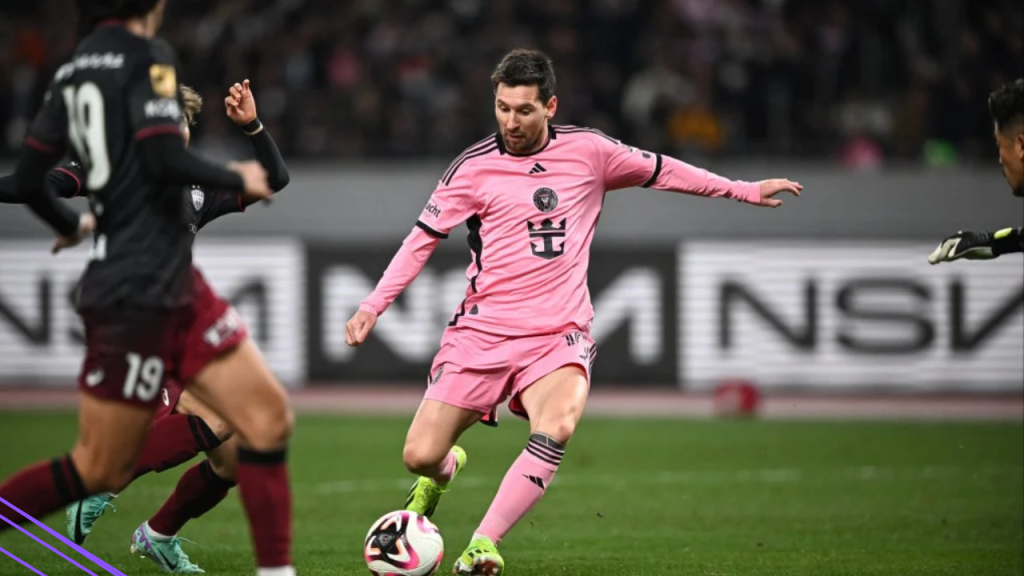
Watching Messi playing soccer is more than watching a famous footballer score goals. It is seeing a player turn small moments into unforgettable pieces of football history. Lionel Messi built his reputation through close control, creative passing, intelligent movement, and a remarkable ability to finish chances with his left foot. His journey began in Rosario, Argentina, before taking him to Barcelona, Paris Saint-Germain, and eventually Inter Miami. Along the way, he collected major club trophies and finally achieved his greatest international dream by winning the 2022 FIFA World Cup with Argentina. His story continued in 2026, when he played in his sixth World Cup and finished the tournament with 21 World Cup goals, setting another remarkable benchmark.
Who Is Lionel Messi?
Lionel Andrés Messi is one of the most successful football players in modern history. Born on June 24, 1987, in Rosario, Argentina, Messi developed his football skills at a young age and quickly showed unusual technical ability. Supporters often call him Leo Messi or La Pulga, a nickname connected with his small stature and explosive movement. His style combines dribbling, passing, finishing, vision, and balance. Although he initially became famous as a forward who attacked from the right side, his role developed over time. Messi learned to operate deeper in midfield, create chances for teammates, control attacking phases, and decide matches through both goals and assists. This versatility has helped make his career exceptional across different football eras.
Messi Playing Soccer as a Young Player
The story of Messi playing soccer started in his hometown of Rosario, where he joined local youth football and developed his natural talent. His early ability attracted attention because he could control the ball closely while moving at speed. At a young age, Messi joined Newell’s Old Boys, where his talent continued to grow. His family later made an important decision that changed his future. At 13, Messi moved to Spain and entered FC Barcelona’s La Masia academy. The transition was difficult because he had to adapt to a new country, new surroundings, and a demanding football environment. However, Barcelona provided the coaching structure and competitive environment that allowed his technical ability to develop into professional-level football.
Barcelona Became Messi’s Football Home
Barcelona became the most important chapter in the early professional career of Messi playing soccer. He made his first-team debut in 2003, beginning a relationship that would eventually produce one of the greatest club careers ever recorded. Messi developed alongside talented players and eventually became Barcelona’s central attacking figure. His partnership with players such as Xavi Hernández and Andrés Iniesta helped create an era of possession-based football that dominated European competition. Barcelona’s official records credit Messi with 672 goals in 778 official appearances, along with numerous trophies. His achievements included 10 La Liga titles and four UEFA Champions League trophies. These numbers show why his Barcelona period remains the foundation of his reputation as an all-time football great.
Messi Playing Soccer at His Peak
During his Barcelona peak, Messi playing soccer became almost impossible for defenders to predict. He could receive the ball near the touchline, cut inside, beat multiple opponents, or suddenly release a perfectly weighted pass. His greatest seasons combined scoring with playmaking rather than relying on one skill. The 2011-12 season stands out because Messi scored 73 official goals for Barcelona. He also scored 50 goals in La Liga that season, another extraordinary record. His low center of gravity allowed him to change direction quickly, while his close touches kept the ball under control even in crowded areas. Instead of depending on physical strength, Messi used timing, balance, acceleration, intelligence, and technique to create advantages against defenders.
Messi’s Unique Playing Style
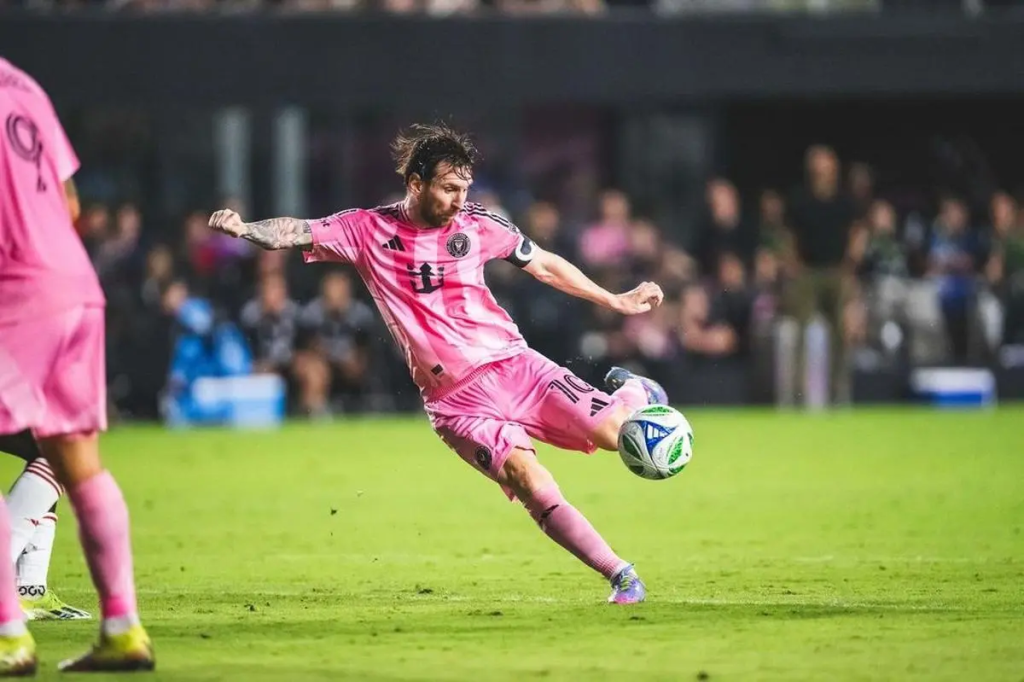
The style of Messi playing soccer is built around efficiency rather than unnecessary movement. His first touch often places the ball exactly where he needs it for the next action. When defenders approach, he uses small touches to protect possession and quick changes of direction to escape pressure. His left foot is particularly dangerous because he can use it for curling shots, through balls, crosses, chips, and controlled finishes. Messi also understands space exceptionally well. He often moves into areas where defenders have difficulty deciding whether to follow him or protect the defensive line. This combination of technical control and tactical intelligence explains why Messi can influence a match even when he is not constantly running at full speed.
Dribbling Made Messi Different
Dribbling became one of the most recognizable features of Messi playing soccer. Unlike players who depend mainly on long sprints, Messi often keeps the ball extremely close to his body. This allows him to make several decisions within a very short space. His low center of gravity helps him remain balanced while changing direction, and his quick feet make tackles difficult to time. Some of his most memorable goals came when he received the ball outside the penalty area and moved through several defenders before shooting. What makes these runs special is not simply the number of opponents he beats. Messi usually combines dribbling with awareness, meaning each touch has a purpose. He knows when to continue, when to pass, and when to shoot.
Passing and Playmaking Ability
Many discussions about Messi playing soccer focus on goals, but his passing ability deserves equal attention. Messi developed into an elite playmaker who could create chances from different areas of the pitch. His through passes can split defensive lines, while his short combinations allow attacking teammates to move into dangerous positions. He also became highly effective at switching play with longer passes. As his career progressed, Messi increasingly operated as a creative midfielder or deep-lying playmaker. This change helped him remain influential even when his acceleration was not the same as during his younger years. Barcelona’s records list Messi as the club’s leading assist provider as well as its leading scorer, demonstrating that his influence extended far beyond finishing chances.
Messi and Free-Kick Mastery
Free kicks became another important part of Messi playing soccer. Early in his career, he was already capable of striking the ball with exceptional accuracy, but his technique became increasingly refined over time. Messi usually focuses on placement and curl rather than simply hitting the ball with maximum power. He studies the goalkeeper’s position and the defensive wall before choosing his target. His ability to score from direct free kicks added another attacking threat to his teams. A free kick around the edge of the penalty area can completely change a match, especially when defenders are reluctant to challenge attackers close to goal. Messi’s calm approach and repeatable technique helped turn these situations into genuine scoring opportunities throughout his career.
Messi’s International Career With Argentina
For many years, Messi’s club achievements were easier to celebrate than his international career. Argentina reached major finals, but success remained difficult to secure. Messi experienced disappointment in the 2014 World Cup final, as Germany defeated Argentina in extra time. Argentina also lost the 2015 and 2016 Copa América finals. Those setbacks created enormous pressure around the national team. Eventually, Messi and Argentina changed that narrative. They won the 2021 Copa América, giving Messi his first major senior international trophy. That victory became an important turning point because it demonstrated that Messi could lead Argentina to a major title. The success also created greater belief before the next World Cup, where the story reached its most important chapter.
Messi Playing Soccer at the 2022 World Cup
The 2022 FIFA World Cup became the defining international chapter of Messi’s career. Argentina lost its opening match against Saudi Arabia but recovered and progressed through the tournament. Messi scored important goals throughout the knockout rounds and played a central role in the final against France. The match ended 3-3 after extra time, with Argentina eventually winning the penalty shootout 4-2. Messi scored twice during the final and successfully converted his penalty in the shootout. He also won the tournament’s Golden Ball as the best player. FIFA notes that Messi became the first player to win the World Cup Golden Ball twice, having previously received the award in 2014. Winning the World Cup completed the major international achievement that had eluded him for much of his career.
Messi Playing Soccer in the 2026 World Cup
The story of Messi playing soccer at international level continued into the 2026 FIFA World Cup, where Argentina entered as defending champion. Messi participated in his sixth World Cup, another historic milestone. His tournament began spectacularly against Algeria, where he scored a hat-trick in Argentina’s 3-0 victory. He then scored twice against Austria and added further goals during the knockout stage. By the end of the tournament, Messi had scored eight goals, taking his career World Cup total to 21. FIFA records show that he finished the 2026 competition as Argentina’s leading World Cup scorer and the tournament’s second-highest historical scorer behind Kylian Mbappé. Argentina eventually reached the final but lost 1-0 to Spain.
Messi’s World Cup Records
Messi’s World Cup record demonstrates how long he remained relevant at the highest international level. Before the 2026 tournament, he already held the record for most World Cup appearances. His sixth tournament strengthened that achievement. During 2026, he also became the first player to score a World Cup hat-trick at the age of 38 and moved beyond Miroslav Klose’s previous record of 16 goals. He eventually reached 21 World Cup goals. Messi also became the first player to provide an assist in five different World Cup editions, adding another unique achievement to his international résumé. His World Cup journey covers 2006, 2010, 2014, 2018, 2022, and 2026, giving his career an extraordinary span across two decades.
Messi’s Move to Paris Saint-Germain
After more than a decade at Barcelona, Messi left the club in 2021 and joined Paris Saint-Germain. The move represented one of the biggest changes of his career because he had spent his entire senior European club career with Barcelona. At PSG, Messi played alongside other elite attackers and adapted to a different tactical environment. His time in Paris produced domestic success, including French league titles, although the club did not achieve its desired UEFA Champions League triumph during his stay. The experience also showed that Messi could continue performing at a high level outside Barcelona’s familiar system. After two seasons in France, Messi chose another major change, moving away from European club football and beginning a new chapter in Major League Soccer.
Messi Playing Soccer for Inter Miami
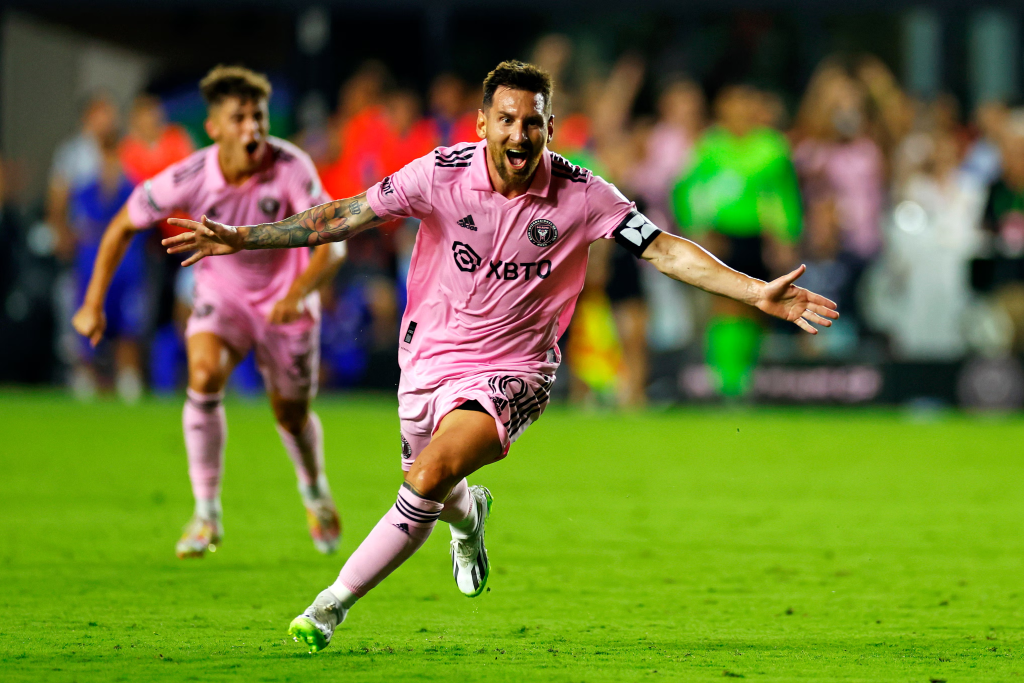
In 2023, Messi joined Inter Miami CF, bringing worldwide attention to Major League Soccer. His arrival transformed the club’s international profile and created enormous excitement among American football supporters. Messi quickly demonstrated his influence by helping Inter Miami win the 2023 Leagues Cup, the first major trophy in the club’s history. His presence also increased interest in MLS matches, tickets, broadcasts, and merchandise. Rather than treating his move to Miami as a simple retirement phase, Messi continued competing seriously and producing goals and assists. Inter Miami later extended his contract through the 2028 MLS season, confirming that the club expects him to remain a central part of its project for several more years.
Messi’s Leadership at Inter Miami
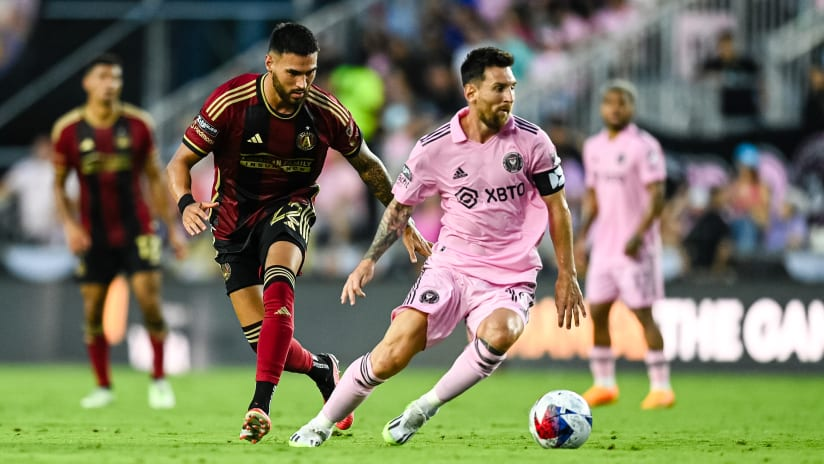
The modern version of Messi playing soccer looks different from the explosive young forward who dominated European football. At Inter Miami, he often combines attacking movement with deeper playmaking responsibilities. His experience allows him to read matches and choose when to accelerate the attack or slow the tempo. His leadership also extends beyond individual performances. Younger players can learn from his positioning, decision-making, and preparation. Inter Miami’s project has placed Messi at the center of its sporting identity, while his long-term contract through 2028 provides continuity. The club has also moved into a new era around Miami Freedom Park, giving Messi an opportunity to play a major role as Inter Miami builds its future both on and off the pitch.
Messi’s Most Important Career Achievements
Messi’s trophy cabinet contains an extraordinary collection of club and international honors. With Barcelona, he won 10 La Liga titles, four UEFA Champions League trophies, seven Copa del Rey titles, and multiple domestic and international trophies. With Argentina, he won the 2021 Copa América, the 2022 World Cup, and other international honors. His individual awards are equally impressive. Messi has won the Ballon d’Or eight times, more than any other player, and has received multiple FIFA and UEFA individual awards. Barcelona’s official records also identify him as the club’s leading scorer with 672 official goals. His achievements combine longevity, consistency, team success, individual excellence, and record-breaking statistics across different competitions.
Why Messi Is Considered One of the Greatest
The debate about the greatest football player will continue, but Messi has an unusually strong case. His greatness does not depend on one statistic. He combines scoring, assists, dribbling, passing, chance creation, set pieces, tactical intelligence, and longevity. Messi playing soccer has remained effective through major changes in football tactics and team structures. He succeeded under different coaches and alongside different generations of teammates. His ability to adapt is especially important. As his physical game changed with age, he increasingly relied on positioning, vision, passing, and decision-making. That evolution allowed him to remain influential into his late thirties. His World Cup success in 2022 and record-setting 2026 campaign further strengthened his place among football’s most historically important players.
Messi’s Influence on Modern Football
The influence of Messi playing soccer extends beyond trophies and statistics. Young footballers study his movements, first touch, dribbling technique, passing choices, and finishing. Coaches have also used Messi’s career to demonstrate how an attacking player can combine individual creativity with structured team play. His success helped popularize a style based on close control and intelligent movement rather than relying only on physical strength. Messi’s influence also reached the United States after his move to Inter Miami. His presence increased global attention toward MLS and introduced many new viewers to American professional football. At the same time, his long career has shown that elite performance can evolve. Messi no longer needs to play exactly as he did at 25 to remain one of football’s most influential players.
Conclusion: The Legacy of Messi Playing Soccer
The story of Messi playing soccer is a story of talent, persistence, adaptation, and extraordinary achievement. From Rosario and La Masia to Barcelona, Paris, Miami, and six World Cups, Messi has repeatedly found ways to influence the game. His 2022 World Cup victory completed the greatest missing achievement in his career, while his 2026 World Cup campaign added another remarkable chapter. His record of 21 World Cup goals, eight Ballon d’Or awards, hundreds of club goals, and an enormous collection of trophies reflects his consistency across generations. Yet his greatest legacy may be the way he plays. Messi shows that intelligence, technique, creativity, and timing can be just as powerful as physical strength. For millions of fans, watching Messi play remains an unforgettable football experience.
FAQs About Messi Playing Soccer
1. What position does Lionel Messi play?
Lionel Messi primarily plays as a forward or attacking midfielder. Earlier in his career, he often started from the right side and moved toward the center using his left foot. As he became older, his role gradually changed. He began operating deeper, where he could receive the ball, create chances, and control attacking phases. His flexibility means that calling him only a traditional striker does not fully explain his game. Messi can score like a forward, pass like a midfielder, and create chances from areas normally associated with playmakers. This versatility has helped him remain effective for Argentina and Inter Miami even as his physical style has evolved. His intelligence allows him to change his position depending on the tactical needs of his team.
2. How many World Cups has Messi played?
Messi played in six FIFA World Cups: 2006, 2010, 2014, 2018, 2022, and 2026. His first appearance came as a teenager at the 2006 tournament in Germany. Over the following years, he became Argentina’s leading player and eventually captained the team to World Cup glory in 2022. His participation in 2026 extended his international career to an extraordinary sixth tournament. FIFA records identify Messi as the player with the most World Cup appearances and list 21 World Cup goals after the 2026 competition. His six-tournament career is especially remarkable because very few players remain capable of competing at international level across such a long period.
3. How many World Cup goals does Messi have?
Lionel Messi finished the 2026 FIFA World Cup with 21 goals. Before the tournament, he had already established himself as one of the competition’s leading scorers. During 2026, he scored a hat-trick against Algeria, followed by two goals against Austria and additional goals during the knockout stage. His eight goals during the tournament took his overall World Cup total to 21. FIFA records confirm that Messi became the all-time leading World Cup scorer during the 2026 competition after surpassing Germany’s Miroslav Klose, who previously held the record with 16 goals. Messi’s 21 goals came across six World Cup appearances, making his international scoring record one of the defining statistics of his career.
4. Does Messi still play soccer?
Yes. Lionel Messi continues to play professional soccer for Inter Miami CF and remains involved with Argentina’s national team. Inter Miami announced a contract extension that keeps Messi at the club through the 2028 MLS season. His role has naturally evolved with age, but he remains an important attacking player and creative force. Instead of depending entirely on explosive runs, Messi increasingly uses positioning, passing, vision, and intelligent movement. His continued participation also demonstrates his commitment to competitive football after leaving European club football. The 2026 season and World Cup provided further evidence that Messi can still influence important matches. His contract with Inter Miami means fans can expect to see another phase of his career develop in Major League Soccer.
5. How many Ballon d’Or awards has Messi won?
Lionel Messi has won the Ballon d’Or eight times, giving him the highest total in the award’s history. The award recognizes outstanding individual performance in world football and considers a player’s achievements, influence, and overall season. Messi’s victories span different stages of his career, from his dominant Barcelona years to his later international success. His 2022 World Cup triumph played a major role in strengthening his individual legacy and was followed by further recognition. Messi’s Ballon d’Or record is significant because it reflects not only his goal-scoring ability but also his playmaking, consistency, and influence on major matches. Together with his club trophies and international achievements, the eight awards form an important part of his case as one of football’s greatest players.
6. What makes Messi’s soccer style so special?
Messi’s style stands out because he combines several elite skills without making the game look complicated. His close ball control, rapid changes of direction, vision, passing, finishing, and movement allow him to create opportunities in very small spaces. His left foot gives him exceptional control when shooting or passing, while his understanding of space helps him appear in dangerous positions at the right moment. Another important feature is his ability to adapt. Young Messi relied more heavily on acceleration and dribbling, while the older Messi increasingly uses passing, positioning, and game intelligence. This evolution has allowed him to remain effective across different leagues and tactical systems. His ability to combine creativity with efficiency is one reason his playing style continues to inspire footballers worldwide