
Introduction
The ladder toss game is one of the most popular outdoor recreational games enjoyed across the world for its simplicity, portability, and engaging gameplay. It is commonly played at backyard parties, beach outings, camping trips, tailgate events, and family gatherings. The beauty of the ladder toss game lies in its easy learning curve—anyone can start playing within minutes while still enjoying a competitive and strategic experience. Players throw bolas (two balls connected by a rope) toward a ladder-shaped frame to score points. Despite its simple appearance, the ladder toss game requires accuracy, timing, and consistency to master, making it enjoyable for both beginners and experienced players.
History and Evolution of Ladder Toss Game
The ladder toss game has unclear historical roots, but it is widely believed to have originated in North America as a casual backyard activity. It gained popularity during the late 20th century when outdoor recreational games became a major part of family entertainment culture. Early versions were handmade using wooden ladders and improvised bolas, but later commercial versions standardized the design using PVC, plastic, and lightweight metals. The rise of camping culture and outdoor social gatherings significantly boosted the popularity of the ladder toss game, making it a staple in modern recreational sports collections.
Concept and Objective of Ladder Toss Game
The main objective of the ladder toss game is to score points by throwing bolas onto different rungs of a ladder structure. Each ladder has typically three horizontal bars, each assigned different point values. The top rung usually carries the highest score, while lower rungs offer fewer points. Players compete individually or in teams, aiming to reach a predetermined score—commonly 21 points—to win. The simplicity of the concept makes the ladder toss game highly accessible, yet the precision required adds a layer of challenge that keeps players engaged for long periods.
Equipment Used in Ladder Toss Game
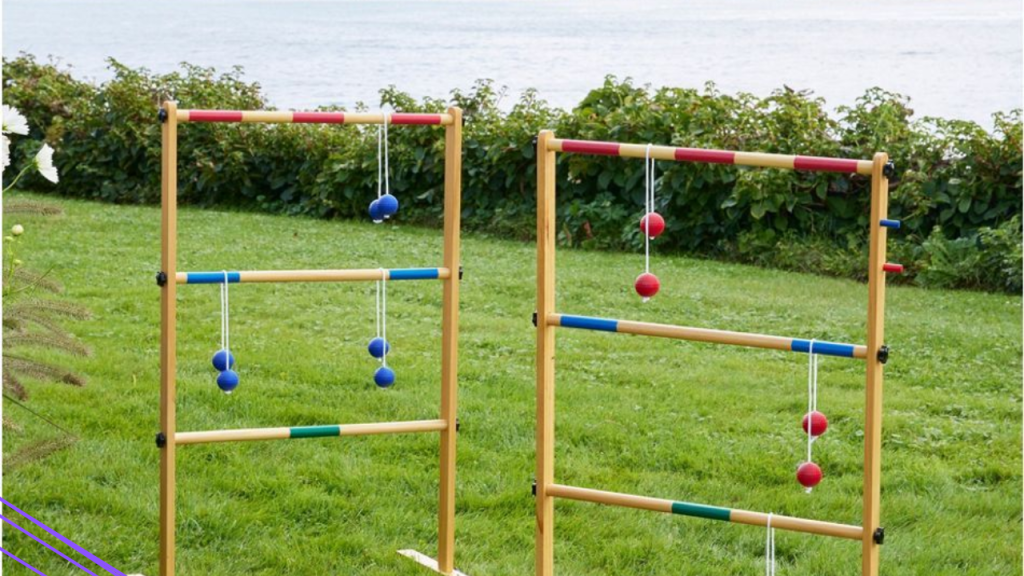
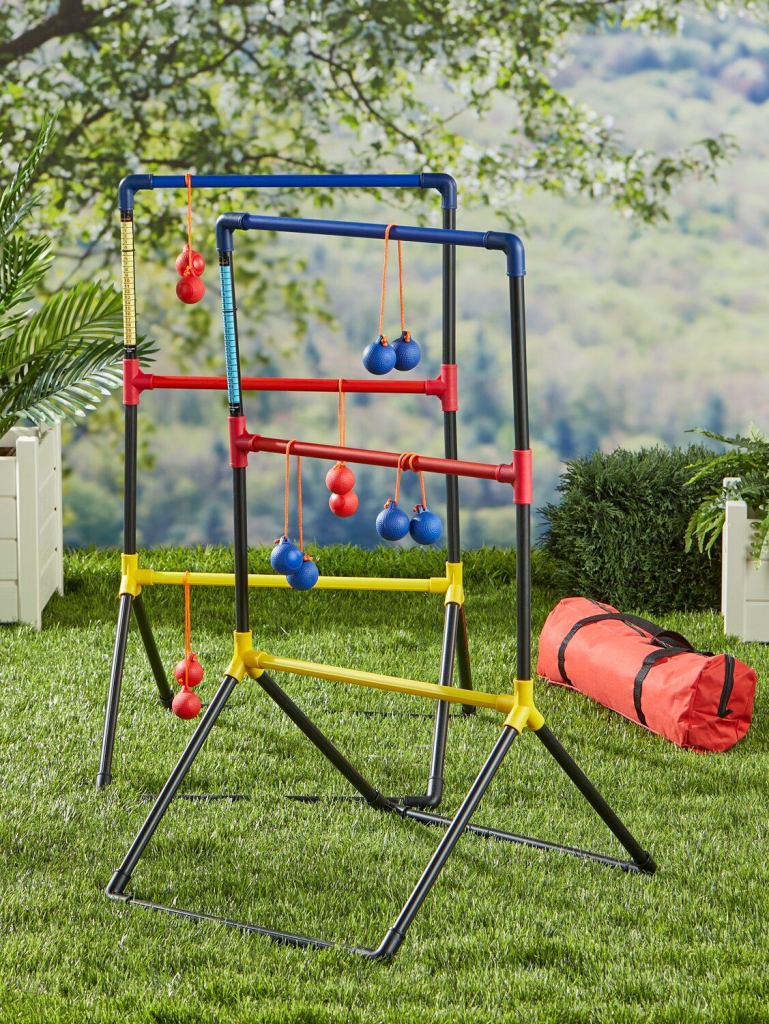
A standard ladder toss game set includes two main components: the ladder structure and bolas. The ladder is typically made of durable materials like PVC or wood and features three horizontal rungs. Bolas consist of two weighted balls connected by a durable rope, designed to wrap around the ladder rungs when thrown correctly. High-quality ladder toss game sets also include carrying cases, score trackers, and weather-resistant coatings. The lightweight and portable design makes it ideal for outdoor use, allowing players to set up the game almost anywhere with flat ground.
Ladder Toss Game Setup and Court Arrangement
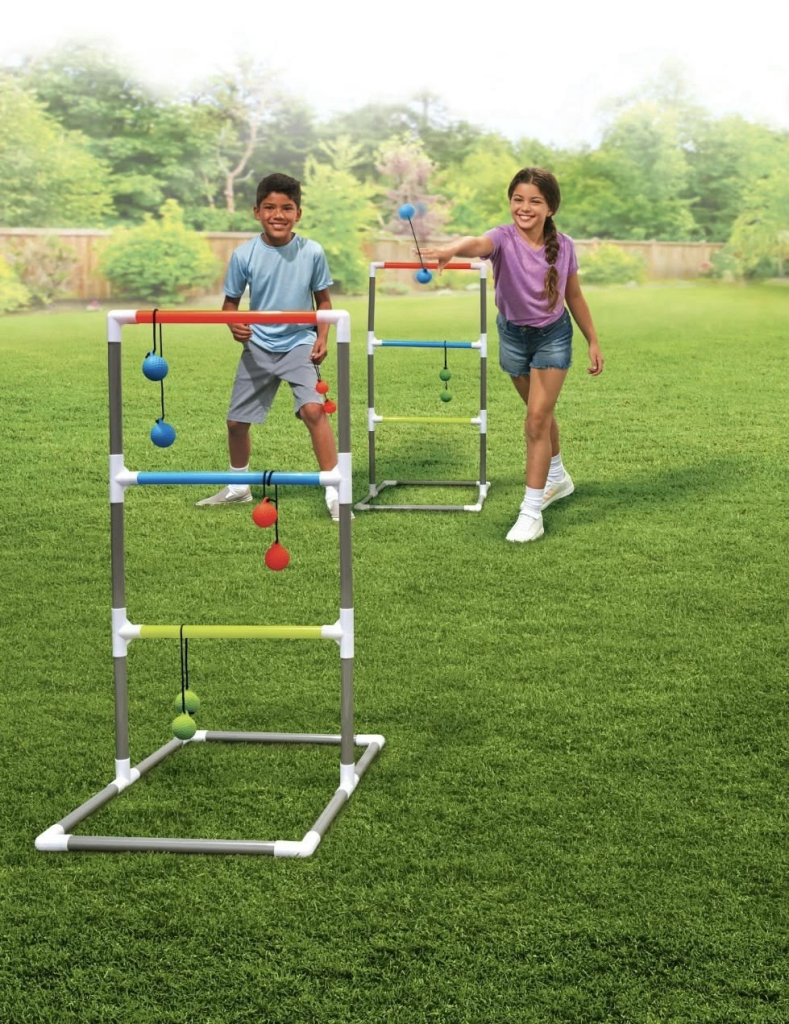
Setting up the ladder toss game is simple and usually takes less than five minutes. The ladder is placed on a flat surface, and players decide a throwing distance, typically between 15 to 25 feet, depending on skill level. Beginners may prefer shorter distances, while experienced players increase the distance for added challenge. Each player stands behind a designated throwing line and takes turns throwing bolas. Proper spacing ensures fair play and safety. The easy setup is one of the key reasons the ladder toss game is widely enjoyed in casual environments.
Rules of Ladder Toss Game Explained
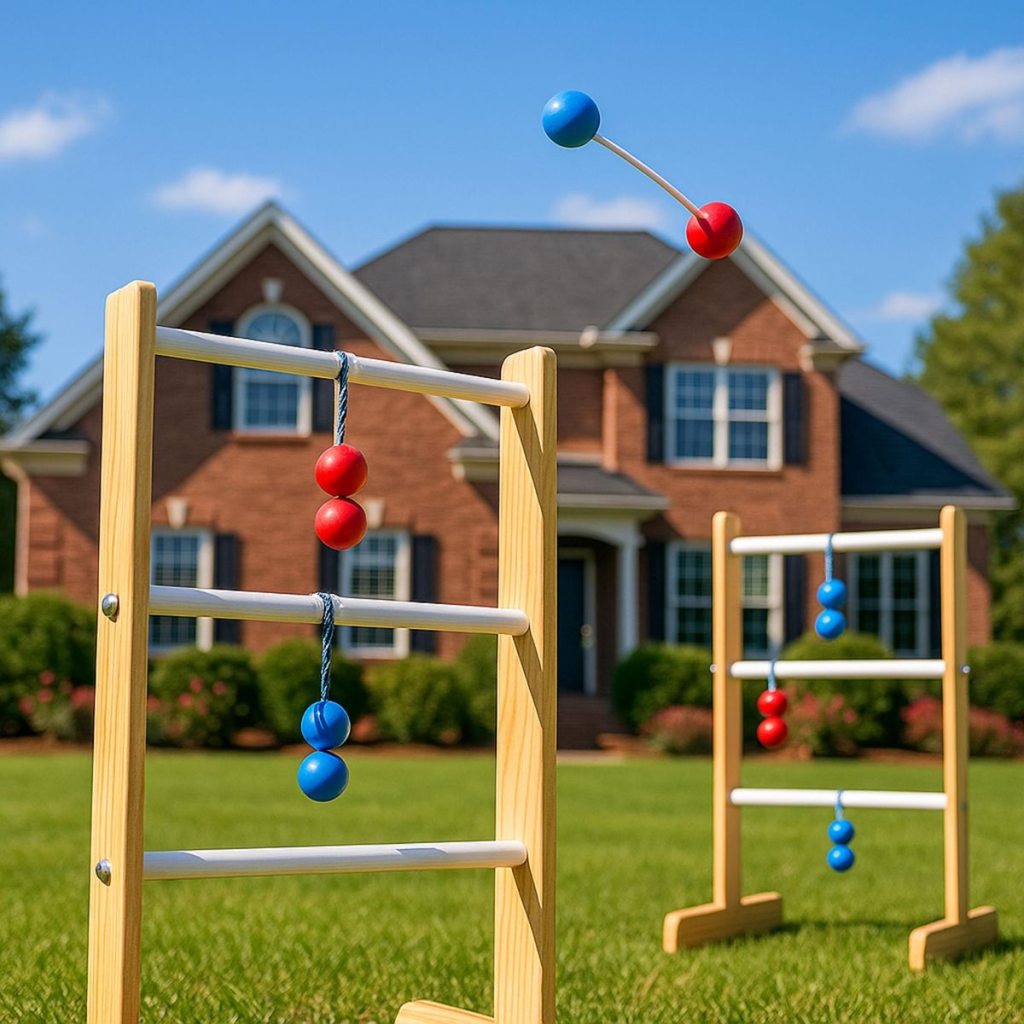
The rules of the ladder toss game are straightforward. Each player gets a set number of bolas—usually three—and throws them one at a time toward the ladder. Points are awarded based on which rung the bola wraps around. The top rung typically scores 3 points, the middle 2 points, and the bottom 1 point. If a bola does not land on any rung, it scores zero. The game continues in rounds until a player or team reaches the winning score. The simple rules make the ladder toss game easy to learn but still competitive.
Scoring System and Point Calculation
The scoring system in the ladder toss game is designed to balance simplicity with strategy. Only bolas that remain securely wrapped around a rung after all throws are counted. In some variations, cancellation scoring is used where opposing team scores on the same rung cancel each other out, adding a competitive edge. This system encourages players to not only aim for high-value rungs but also block their opponent’s scoring opportunities. Understanding the scoring system is essential for mastering the ladder toss game and developing advanced gameplay strategies.
Step-by-Step Gameplay Process
Playing the ladder toss game follows a simple step-by-step process. First, the ladder is set up at the agreed distance. Players decide who starts first, often through a coin toss. Each player then takes turns throwing bolas toward the ladder. After all throws, scores are calculated based on ladder placement. The ladder toss game continues in rounds until one player or team reaches the target score. The structured yet flexible gameplay makes it suitable for both casual fun and competitive matches.
Throwing Techniques for Ladder Toss Game
Mastering throwing technique is crucial in the ladder toss game. The most effective method is the underhand swing, which provides better control and accuracy. Players aim to create a smooth arc so the bola wraps naturally around the rung. Wrist control, release timing, and consistent motion are key factors. Advanced players adjust their force depending on distance and wind conditions. Practicing repetition helps improve muscle memory, which significantly enhances performance in the ladder toss game over time.
Advanced Strategies to Win Ladder Toss Game
Winning the ladder toss game requires more than just accuracy; it involves strategy. Players often aim for the top rung for maximum points but must balance risk and reward. Blocking opponents by placing bolas strategically can prevent them from scoring easily. Maintaining a consistent rhythm and avoiding rushed throws also improves performance. Experienced players in the ladder toss game focus on steady scoring rather than occasional high-risk shots, ensuring long-term advantage during the match.
Common Mistakes Players Should Avoid
Many beginners make mistakes in the ladder toss game that affect their performance. Overthrowing or underthrowing bolas is one of the most common issues. Another mistake is ignoring environmental factors such as wind, which can significantly alter the trajectory. Poor stance and inconsistent throwing techniques also reduce accuracy. Players who fail to practice regularly often struggle with control. Avoiding these mistakes early helps improve overall performance in the ladder toss game and leads to more enjoyable gameplay.
Benefits of Playing Ladder Toss Game
The ladder toss game offers several physical and mental benefits. It improves hand-eye coordination, concentration, and motor skills. Because it involves light physical activity, it is suitable for players of all ages, including children and seniors. The game also promotes social interaction, teamwork, and friendly competition. Additionally, the ladder toss game encourages outdoor activity, making it a healthy alternative to screen-based entertainment and sedentary lifestyles.
Ladder Toss Game for Parties and Events
The ladder toss game is a popular choice for parties, weddings, picnics, and corporate events. Its simple rules make it easy for guests to participate without prior experience. It serves as an excellent icebreaker activity that encourages social engagement. Event organizers often include the ladder toss game because it is portable, safe, and suitable for all age groups, making it one of the most versatile recreational games available today.
Indoor vs Outdoor Gameplay Experience
Although the ladder toss game is primarily designed for outdoor use, it can also be played indoors if space allows. Outdoor environments provide more authentic gameplay with natural challenges like wind and uneven surfaces. Indoor settings offer controlled conditions, making it easier for beginners to practice accuracy. Many families enjoy both versions of the ladder toss game, depending on weather and available space.
Variations of Ladder Toss Game
There are several variations of the ladder toss game depending on regional preferences and manufacturers. Some versions adjust point values, ladder height, or throwing distance. Competitive variations may include tournament rules or timed rounds. These variations keep the ladder toss game fresh and adaptable for different skill levels and playing environments, ensuring long-term enjoyment.
Safety Guidelines for Ladder Toss Game
Safety is an important aspect of the ladder toss game, especially in group settings. Players should maintain a safe distance while throwing to avoid accidental injury from bolas. The playing area should be free of obstacles, and supervision is recommended when children are playing. Using high-quality equipment also reduces safety risks. Following basic safety rules ensures that the ladder toss game remains fun and injury-free.
Why Ladder Toss Game Is So Popular
The popularity of the ladder toss game comes from its simplicity, portability, and entertainment value. Unlike complex sports, it requires no special training or physical fitness level. It can be played almost anywhere and enjoyed by people of all ages. The social and competitive aspects of the ladder toss game make it a favorite choice for casual recreation and outdoor gatherings worldwide.
Conclusion
The ladder toss game is a timeless outdoor activity that combines fun, strategy, and skill in a simple format. Its easy setup, minimal equipment requirements, and engaging gameplay make it suitable for all age groups. Whether played casually at family gatherings or competitively among friends, the ladder toss game delivers consistent entertainment and social interaction. With practice, players can improve their accuracy, develop strategies, and enjoy an even more rewarding experience.
FAQs
1. What is ladder toss game?
It is a recreational game where players throw bolas onto a ladder to score points.
2. How do you win ladder toss game?
The first player or team to reach 21 points wins.
3. What equipment is needed?
A ladder structure and bolas.
4. Is ladder toss game hard to learn?
No, it is very easy and beginner-friendly.
5. Can kids play ladder toss game?
Yes, it is safe and suitable for children with supervision.
6. How far should the ladder be placed?
Usually between 15–25 feet depending on skill level.